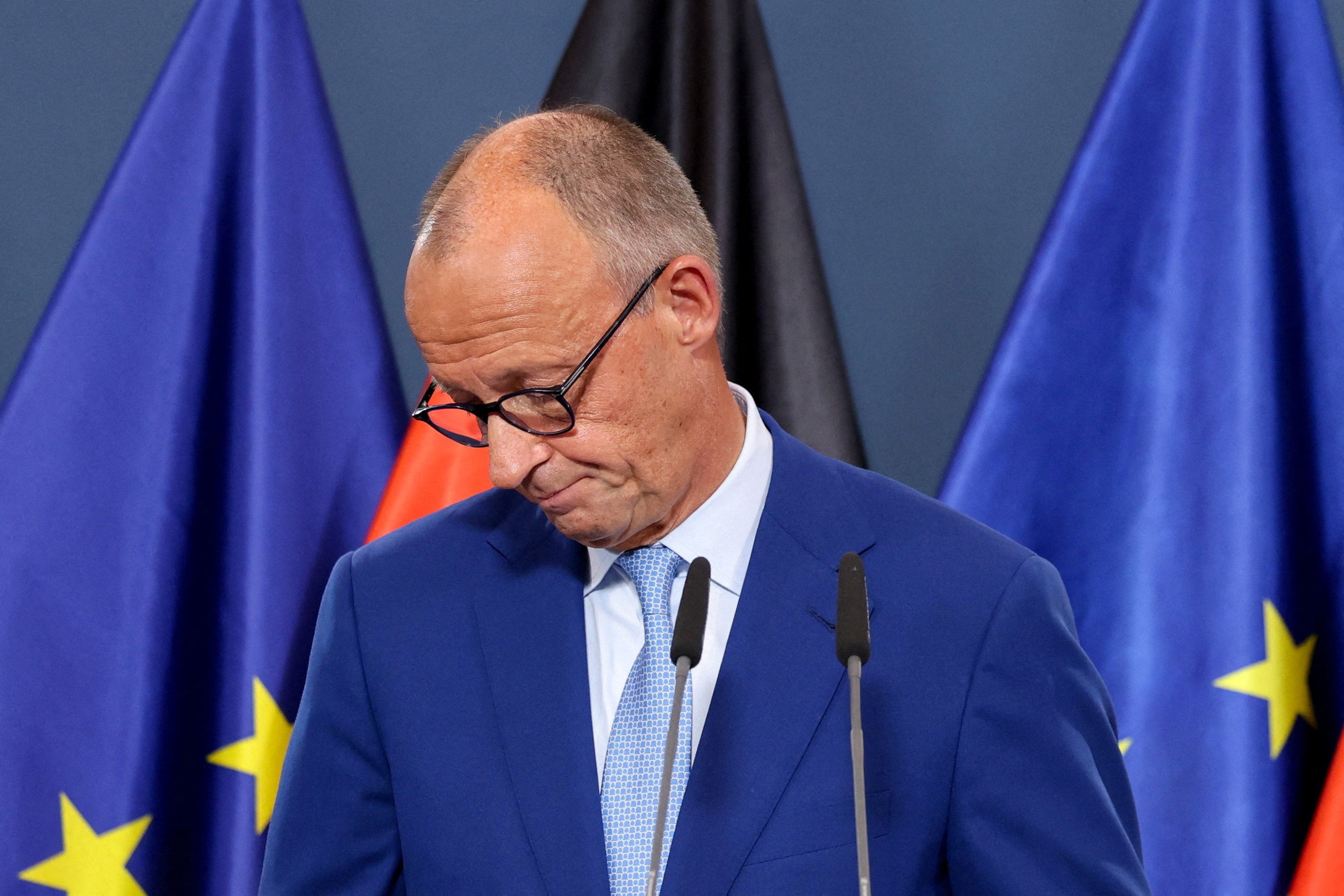
BERLIN — German Chancellor Friedrich Merz faced the most severe political crisis of his tenure on Monday, branding a crucial regional ballot a "disaster" for his conservative Christian Democratic Union (CDU) following sweeping, damaging losses at the ballot box. Yet, in a defiant early-morning address at party headquarters, the embattled leader dug in his heels, vowing to press ahead with his polarizing national reform agenda regardless of the domestic political fallout.
The stunning electoral reversal has sent shockwaves through the heart of the European Union’s largest economy. Financial markets are closely monitoring the political instability in Berlin, fearing that a weakened chancellor could derail critical fiscal packages and industrial revitalization plans. Despite fierce pressure from opposition parties and murmurs of discontent within his own ranks, Merz made it unequivocally clear: he has no intention of stepping down.
An Electoral 'Disaster' Unfolds
Exit polls and preliminary official results paint a grim picture for the center-right CDU. Voters in the closely watched state election handed Merz’s party a stinging defeat, punishing the ruling establishment over mounting economic anxieties, stubborn inflation, and deep-seated frustrations regarding public infrastructure and energy policies.
Speaking to somber party loyalists in Berlin just hours after the polls closed, Merz did not mince words. "There is no point in sugarcoating this," Merz told reporters, visibly tense. "This is a bitter result. For our party, this election is quite simply a disaster."
The defeat strikes at the core of Merz’s political authority. Having ascended to the chancellorship on a promise of pragmatic economic stewardship, fiscal discipline, and decisive governance, the regional rout exposes a growing disconnect between Berlin’s political elite and an increasingly restless German electorate.
Key Takeaways From the Political Shocker
- Severe CDU Defeat: Exit polls confirm punishing double-digit losses for Merz's center-right party in the regional parliament.
- Defiant Stance: Rejecting immediate calls for his resignation, Chancellor Merz insisted he will stay on to steer Germany through turbulent economic waters.
- Reform Agenda Threatened: Merz vowed to accelerate his controversial structural and fiscal reforms, despite warnings from critics that the strategy is alienating voters.
- Market and Political Anxiety: Investors and EU partners are watching closely, concerned that domestic political weakness will paralyze German leadership on the European stage.
Why This Matters for Markets and the EU
Germany’s stability has long served as the bedrock of the European Union. However, prolonged political fragmentation and voter disillusionment threaten to stall policy implementation at a time when the eurozone is grappling with sluggish growth, high energy costs, and intense global competition from the United States and China.
Economic analysts warn that if Merz’s coalition is paralyzed by internal friction and regional rebellions, crucial decisions regarding industrial subsidies, green transition timetables, and defense spending could be indefinitely delayed.
| Metric / Detail | Description |
|---|---|
| Key Figure | German Chancellor Friedrich Merz |
| Affected Party | Christian Democratic Union (CDU) - Centre-Right |
| Election Outcome | Damaging losses in regional state election |
| Chancellor's Response | Labeled it a "disaster," but vowed to stay in office |
| Core Focus | Controversial economic and structural reforms |
The Road Ahead: Reforms vs. Public Backlash
Rather than adopting a defensive posture or scaling back his ambitions, Merz signaled that the electoral blow should serve as a wake-up call to double down on structural overhauls. He argued that Germany's underlying economic challenges require bold, sometimes painful medicine that voters may initially resist but will ultimately validate.
"We cannot pause our work simply because an election has delivered a painful verdict," Merz stated. "Germany is facing structural hurdles that have been ignored for decades. We were elected to fix the foundations of this country, and I intend to finish that job."
Political pundits remain skeptical about whether Merz can successfully execute this strategy without fracturing his governing coalition. Opposition figures wasted no time seizing on the election results, demanding a dramatic pivot in national policy and questioning the chancellor's mandate to govern.
As lawmakers return to Berlin this week, the pressure on Chancellor Merz will only intensify. Whether his vow to weather the storm and push forward with reforms restores confidence or deepens the rift with voters remains one of the most critical questions facing European politics today.
Frequently Asked Questions
Why did Chancellor Merz call the state election result a "disaster"?
Merz used the term because exit polls and preliminary results showed severe, damaging losses for his centre-right CDU party in a key regional ballot, signaling widespread voter dissatisfaction with current national and local policies.
Is Chancellor Merz planning to resign?
No. Despite mounting pressure from political opponents and a punishing electoral defeat, Merz has firmly stated that he will remain in office and continue leading the government.
Historical Context, Comparative Benchmarks & Institutional Risk Assessment
To fully evaluate the trajectory of German Chancellor Merz calls state election a 'disaster' for his party but vows to stay on within the broader Politics & World Affairs landscape, policy researchers and institutional analysts compare current field indicators against multi-year structural baselines. Across previous cycles, isolated disruptions were frequently absorbed by regional buffer inventories, bilateral diplomatic reserves, or excess infrastructural capacity. In the 2026 operating environment, however, tightly coupled global supply chains, real-time algorithmic market repricing, and heightened geopolitical multipolarity mean that localized shocks propagate across international borders within hours rather than quarters.
Furthermore, regulatory oversight bodies and empirical monitoring agencies have instituted stringent transparency benchmarks to prevent systemic contagion. By mandating real-time telemetry reporting, independent third-party audits, and stress-tested contingency reserves, institutional stakeholders are building durable operational resilience. Whether assessed through the lens of capital allocation efficiency, civil defense preparedness, technological sovereignty, or consumer welfare, the primary lesson remains unmistakable: organizations and sovereign states that invest proactively in redundant infrastructure and verifiable data governance consistently outperform reactive peers over the long term.
Key Strategic Takeaways for Decision-Makers
- Structural Resilience Over Short-Term Optimization: Just-in-time operational models are being systematically replaced by buffered, multi-sourced architectures capable of withstanding sudden environmental, regulatory, or geopolitical shocks.
- Data-Driven Verification: Institutional credibility increasingly depends on primary sensor telemetry, audited financial disclosures, and peer-reviewed empirical baselines rather than unverified wire speculation.
- Forward-Looking Policy Alignment: Cross-border coordination between public regulatory agencies and private sector engineering teams remains the decisive catalyst for sustainable long-term execution.