Executive Takeaways
- Concentration Risk vs. Momentum: Exchange-Traded Funds (ETFs) tracking the "Magnificent Seven" offer targeted exposure to mega-cap equities, yet they inherently amplify portfolio sensitivity to sector-specific shocks and regulatory headwinds.
- Thematic Tool Integration: Recent analytics updates from platforms like TradingView and Zacks Thematic underscore a shift toward granular broker rating breakdowns, revealing nuanced sentiment shifts among institutional analysts.
- Capital Allocation Dynamics: With broker consensus maintaining a heavy weighting toward "Strong Buys"—historically hovering near 60%—investors must weigh high enterprise ROI and infrastructure scalability against stretched valuation multiples.
- Strategic Risk Mitigation: Deploying these specialized vehicles requires rigorous portfolio rebalancing, an understanding of market liquidity profiles, and continuous monitoring of cloud compute architecture and AI monetization cycles.
NEW YORK — In an era defined by structural market polarization, the architecture of equity investing has undergone a profound transformation. The rise of specialized investment vehicles targeting the market's premier tier of mega-cap technology titans—collectively dubbed the "Magnificent Seven"—has fundamentally altered how institutional and retail capital is deployed. Recent data feeds and analytical tools integrated across major financial terminals, including comprehensive tracking mechanisms highlighted by TradingView and Zacks Thematic, have brought the mechanics of Magnificent Seven ETF investing under intense scrutiny. As market participants navigate shifting interest rate paradigms and unprecedented artificial intelligence (AI) capital expenditure cycles, understanding the mechanics, valuations, and risk parameters of these concentrated instruments has become an imperative for modern asset allocation.
The Structural Evolution of Mega-Cap Concentration
To contextualize the current appetite for Magnificent Seven ETFs, one must examine the macro-catalysts that propelled these seven entities—Microsoft, Apple, NVIDIA, Alphabet, Amazon, Meta Platforms, and Tesla—to command an unprecedented percentage of global equity market capitalization. Over the past decade, these corporations transitioned from standard growth equities into indispensable global utilities. Their dominance is anchored by robust cloud compute architecture, pervasive digital ecosystems, and aggressive investments in generative AI infrastructure scalability.
However, holding these individual equities directly demands substantial capital and exposes investors to idiosyncratic company risks. This structural friction catalyzed the proliferation of thematic and concentrated ETFs. By packaging these high-beta, high-valuation champions into single-ticker instruments, fund managers have democratized access to structural momentum. Yet, this convenience introduces a double-edged sword: investors inherit a consolidated bet on a narrow segment of the global economy, where a regulatory antitrust ruling or supply chain bottleneck in advanced semiconductor manufacturing can trigger cascading portfolio drawdowns.
Analyzing Broker Sentiment and Institutional Consensus
A granular examination of recent market data reveals critical shifts in institutional sentiment. According to recent analytics sourced via Zacks Thematic tools featured on major charting platforms, broker rating breakdowns illustrate shifting tides in Wall Street conviction. While historical metrics—such as those observed roughly a month prior where "Strong Buy" recommendations constituted approximately 60% of total analyst coverage—demonstrated near-unanimous optimism, contemporary data reflects a more discerning approach.
Analysts are increasingly segmenting these seven behemoths based on near-term execution risks. While NVIDIA and Microsoft continue to command dominant shares of enterprise AI spending, entities facing margin compression, slowing hardware upgrade cycles, or intense pricing pressures in digital advertising and electric vehicle manufacturing are encountering more nuanced evaluations. This divergence underscores the necessity for investors to look beyond generalized ETF tickers and analyze the underlying weighting methodologies and rebalancing frequencies of the specific funds they select.
Comparative Metrics: Magnificent Seven ETF Landscape
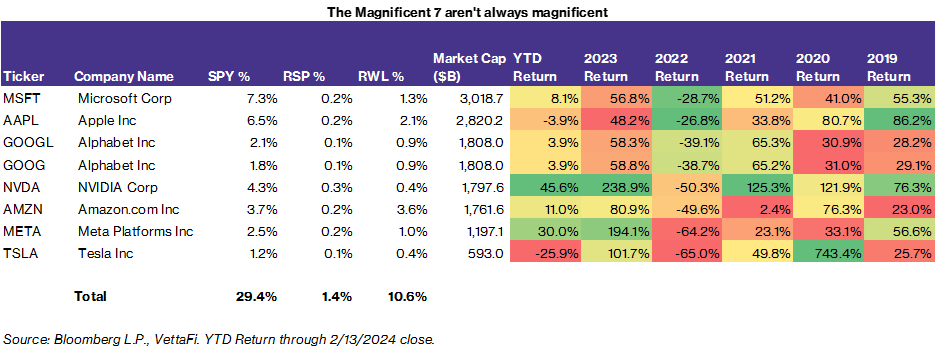
Evaluating specialized mega-cap exposure requires a rigorous side-by-side analysis of key operational and financial metrics. The table below outlines the critical parameters governing these investment vehicles, comparing fundamental characteristics, institutional sentiment tracking, and risk profiles.
| Metric / Parameter | Mag 7 Concentrated ETFs | Broad Market Indexes (e.g., S&P 500) |
|---|---|---|
| Constituent Concentration | Extremely high (Top 7 drive >80% of returns) | Diversified across 11 GICS sectors |
| Average P/E Valuation Multiple | Elevated (Frequently exceeding 30x–35x forward earnings) | Moderate-to-High (Historical average ~21x–23x) |
| Analyst "Strong Buy" Proportion | Fluctuating around 55%–60% based on recent Zacks data | Generally stabilized around 45%–50% |
| Primary Growth Driver | Generative AI, enterprise cloud migration, digital ads | Broad macroeconomic consumption and industrial output |
| Risk Mitigation Profile | Vulnerable to antitrust, regulatory compliance, and multiple compression | Buffered by defensive sectors (utilities, healthcare, staples) |
Industry & Market Implications
The proliferation and heavy trading volume of Magnificent Seven ETFs send profound ripples across the broader financial ecosystem. On the winning side of the ledger are retail brokerages, market makers, and ETF issuers who benefit immensely from the high trading velocity and fee generation associated with thematic products. Furthermore, suppliers of advanced semiconductor components, specialized data center real estate, and high-voltage power generation infrastructure find themselves downstream beneficiaries of the relentless capital expenditure unleashed by these seven tech giants.
Conversely, potential losers in this dynamic include traditional, unhedged value portfolios and non-tech sectors suffering from capital starvation. When passive and thematic flows concentrate trillions of dollars into a handful of equities, smaller-cap companies struggle to attract cost-effective capital, exacerbating a two-speed economy. Additionally, institutional risk managers warn that heavy reliance on these ETFs creates systemic fragility. If macroeconomic shocks force a sudden de-risking event, correlated selling across these concentrated products can overwhelm market liquidity, leading to magnified intraday volatility.
Frequently Asked Questions (People Also Ask)
What is a Magnificent Seven ETF, and how does it differ from holding individual stocks?
A Magnificent Seven ETF is a specialized, thematic exchange-traded fund designed to track the performance of the seven dominant US mega-cap technology companies. Unlike holding individual shares—which requires significant capital to purchase round lots of each high-priced stock and continuous manual rebalancing—an ETF bundles these equities into a single tradeable security, providing instant, diversified exposure to the group with lower initial capital requirements.
How do broker ratings and tools like Zacks Thematic impact ETF investment decisions?
Platforms like TradingView and Zacks Thematic aggregate broker rating breakdowns—such as the distribution of Buy, Hold, and Sell recommendations—to offer real-time sentiment analysis. When major brokerages adjust their consensus (e.g., maintaining or reducing "Strong Buy" allocations from previous thresholds near 60%), it signals shifting institutional confidence regarding earnings growth, margin sustainability, and valuation multiples, helping investors time their entry or rebalancing strategies.
What are the primary risk factors associated with investing in concentrated tech ETFs?
The foremost risks include extreme concentration, high valuation multiples, and regulatory vulnerability. Because these funds lack sector diversification, any negative catalyst impacting big tech—such as aggressive antitrust enforcement, tightening data privacy laws, or a slowdown in enterprise ROI on AI investments—can result in disproportionately steep portfolio declines compared to broader market indexes.
How should investors approach capital allocation and risk mitigation when utilizing these tools?
Investors should treat Magnificent Seven ETFs as satellite holdings rather than core portfolio foundations. Effective risk mitigation involves establishing strict asset allocation ceilings (e.g., limiting tech-concentrated exposure to a specific percentage of net worth), utilizing trailing stop-losses, and pairing these growth-oriented vehicles with defensive, cash-generating sectors to weather potential market corrections.
Future Outlook and Strategic Milestones
Looking ahead, the trajectory of Magnificent Seven ETF investing will be dictated by three interlocking variables: the tangible monetization of artificial intelligence, global regulatory scrutiny, and macroeconomic monetary policy. As enterprise clients demand demonstrable enterprise ROI on heavy AI deployments, the tech giants must prove that their staggering infrastructure scalability translates into durable, expanding free cash flows.
Furthermore, regulatory compliance landscapes across the United States, the European Union, and emerging markets will remain a persistent wildcard. Antitrust investigations and data governance mandates hold the capacity to disrupt established business models overnight. For institutional asset managers and sophisticated retail investors alike, the coming quarters will require vigilant tracking of broker consensus shifts, liquidity metrics, and quarterly earnings prints. Navigating this landscape demands a disciplined approach—balancing the undeniable momentum of structural tech innovation against the timeless principles of prudent risk management and portfolio diversification.