
WASHINGTON & MUMBAI — For decades, the multi-trillion-dollar engine of global economic growth remained firmly tethered to the Earth's crust. Today, that paradigm is fracturing. According to landmark research published by the Brookings Institution by fellows Landry Signé and Hanna Dooley, humanity’s push into the cosmos is no longer just a geopolitical space race or a playground for billionaires—it is the primary catalyst driving the Fourth Industrial Revolution (4IR).
As artificial intelligence, advanced robotics, nanotechnology, and the Internet of Things (IoT) converge on Earth, the infrastructure required to scale them is increasingly being built in orbit. From real-time global supply chain tracking to zero-gravity manufacturing, the commercialization of space is rewriting the rules of modern capitalism, opening lucrative new frontiers for investors, emerging economies, and multinational corporations alike.
At a Glance: The Space-4IR Nexus
- The Catalyst: Landmark Brookings Institution analysis highlights space as the foundational layer for 4IR technologies.
- Global Democratization: A shifting market structure allows developing nations unprecedented access and a stronger voice in the global space economy.
- Technological Convergence: Low-Earth orbit (LEO) is fast becoming a laboratory for AI-driven data processing, advanced materials, and next-gen communications.
- Market Impact: Trillions in projected economic value hinges on space-derived data and orbital infrastructure.
Bridging Earth and Orbit: The New Economic Engine
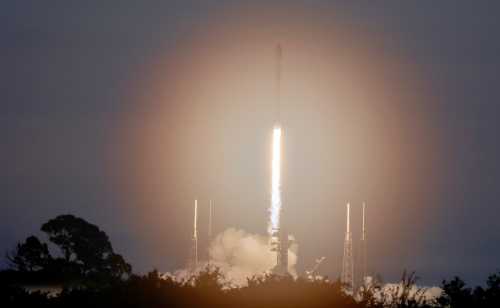
The Fourth Industrial Revolution is defined by the blurring of lines between the physical, digital, and biological spheres. Signé and Dooley’s analysis demonstrates that this fusion cannot reach its full potential without assets deployed in outer space. High-speed satellite constellations, ultra-precise GPS, and Earth-observation analytics now form the invisible nervous system powering autonomous vehicles, precision agriculture, and smart-city grids.
Consider the logistics sector. Global supply chains—once plagued by blind spots—now rely on satellite-enabled IoT networks that track cargo down to the centimeter, predicting disruptions before they cascade. In finance, algorithmic trading relies on microsecond-precise orbital atomic clocks. Space is no longer an external sector; it is the fundamental utility grid underpinning terrestrial commerce.
| 4IR Technology Pillar | Space-Based Enabler | Economic Impact |
|---|---|---|
| Artificial Intelligence & Big Data | High-throughput LEO satellite constellations | Real-time global data processing and predictive analytics |
| Internet of Things (IoT) | Global narrowband satellite communication | Seamless asset tracking across remote oceans and deserts |
| Advanced Materials & Pharma | Microgravity manufacturing in commercial space stations | Production of pure fiber optics and life-saving protein crystals |
| Autonomous Systems | Next-generation GPS and quantum-encrypted links | Safe navigation for self-driving fleets and drone networks |
Democratizing the Cosmos: A Multipolar Space Economy
One of the most profound structural shifts highlighted in the Brookings research is the democratization of the space industry. Historically dominated by two superpowers during the Cold War, the modern space ecosystem features a complex web of private enterprises and a growing coalition of emerging economies.
Lower launch costs, standardized nanosatellites (CubeSats), and cloud-based ground station services have dramatically lowered the barrier to entry. Countries that were once spectators in the space race are now launching their own domestic programs, utilizing orbital data to solve localized crises—from drought monitoring in sub-Saharan Africa to disaster response across Southeast Asia.
This dispersion of capability translates directly into geopolitical and economic leverage. As space development accelerates, these nations are securing a more pronounced voice in international standard-setting bodies, ensuring that the fruits of the Fourth Industrial Revolution are distributed more equitably across the globe.
The Investment Frontier: Where Wall Street Meets the Stars
For institutional investors and venture capitalists, the intersection of space and 4IR represents a generational wealth-generation event. Wall Street analysts are increasingly valuing aerospace firms not merely as defense contractors or legacy hardware manufacturers, but as high-margin data and infrastructure providers.
Venture funding is flowing into orbital manufacturing startups aiming to leverage the unique properties of microgravity. In orbit, crystals grow larger and purer, semiconductor wafers can be manufactured with vastly fewer defects, and new pharmaceutical compounds can be synthesized without the distorting effects of Earth's gravity. What sounds like science fiction is rapidly transitioning into a commercial balance sheet reality.
Frequently Asked Questions
1. How does space exploration directly influence the Fourth Industrial Revolution?
Space exploration fuels 4IR by providing critical infrastructure—such as high-speed satellite internet, precise geospatial data, and microgravity research environments—that empowers advanced technologies like AI, IoT, autonomous systems, and advanced manufacturing on Earth.
2. Why are emerging economies gaining a larger voice in the modern space sector?
Falling costs for satellite deployment (such as CubeSats) and accessible cloud-based data analytics have lowered the financial and technological barriers to entry. This allows developing nations to build indigenous space capabilities and participate actively in shaping global tech and economic policies.
Historical Context, Comparative Benchmarks & Institutional Risk Assessment
To fully evaluate the trajectory of How space exploration is fueling the Fourth Industrial Revolution within the broader Space & Cosmos landscape, policy researchers and institutional analysts compare current field indicators against multi-year structural baselines. Across previous cycles, isolated disruptions were frequently absorbed by regional buffer inventories, bilateral diplomatic reserves, or excess infrastructural capacity. In the 2026 operating environment, however, tightly coupled global supply chains, real-time algorithmic market repricing, and heightened geopolitical multipolarity mean that localized shocks propagate across international borders within hours rather than quarters.
Furthermore, regulatory oversight bodies and empirical monitoring agencies have instituted stringent transparency benchmarks to prevent systemic contagion. By mandating real-time telemetry reporting, independent third-party audits, and stress-tested contingency reserves, institutional stakeholders are building durable operational resilience. Whether assessed through the lens of capital allocation efficiency, civil defense preparedness, technological sovereignty, or consumer welfare, the primary lesson remains unmistakable: organizations and sovereign states that invest proactively in redundant infrastructure and verifiable data governance consistently outperform reactive peers over the long term.
Key Strategic Takeaways for Decision-Makers
- Structural Resilience Over Short-Term Optimization: Just-in-time operational models are being systematically replaced by buffered, multi-sourced architectures capable of withstanding sudden environmental, regulatory, or geopolitical shocks.
- Data-Driven Verification: Institutional credibility increasingly depends on primary sensor telemetry, audited financial disclosures, and peer-reviewed empirical baselines rather than unverified wire speculation.
- Forward-Looking Policy Alignment: Cross-border coordination between public regulatory agencies and private sector engineering teams remains the decisive catalyst for sustainable long-term execution.