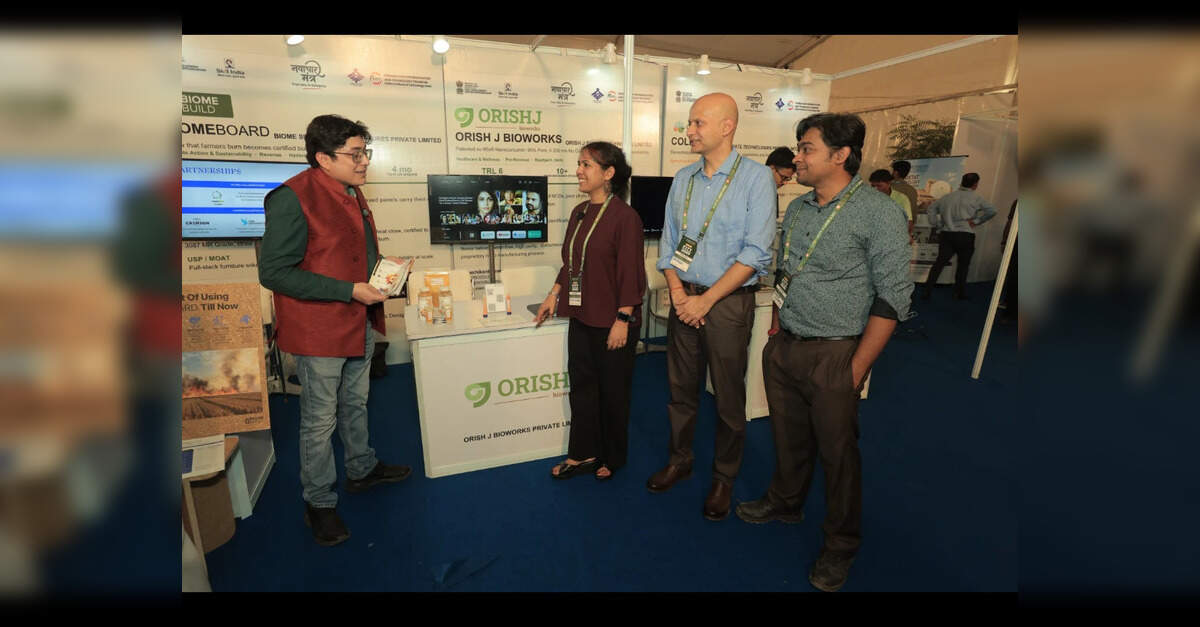
NEW DELHI — In a major push to accelerate technology commercialization and bridge the gap between laboratory research and market deployment, the Indian Institute of Technology (IIT) Delhi has officially unveiled its flagship FITT Forward initiative. Spearheaded by the Foundation for Innovation and Technology Transfer (FITT), the institute's industry-interface arm, the program establishes a structured pipeline designed to fast-track deep-tech intellectual property from academic labs directly into commercial industrial ecosystems.
The program arrives at a crucial moment for India's innovation economy, which has witnessed substantial expansion in patent filings but historically faced bottlenecks in scaling academic prototypes into enterprise-grade commercial products. By integrating seed capital, corporate mentorship, intellectual property (IP) structuring, and rapid prototyping facilities, FITT Forward aims to incubate over 50 deep-tech ventures annually across strategic sectors.
Three Pillars of the FITT Forward Framework
The FITT Forward architecture is built upon three synchronized pillars aimed at de-risking technology translation:
- Collaborative Industry Consortia: Establishing co-development laboratories funded jointly by corporate industry partners and research grants, ensuring that academic investigations address real-world industrial supply chain challenges.
- Accelerated Patent Licensing & IP Valuation: Modernizing institutional licensing protocols to enable faculty and student inventors to license patented technologies to corporate entities or spin-off startups under flexible royalty agreements.
- Venture Incubation & Prototyping Capital: Providing pre-seed translation grants of up to ₹50 lakh per project to facilitate pilot testing, regulatory certifications, and minimum viable product (MVP) fabrication.
| Strategic Domain | Key Research Focus | Industrial Commercialization Target |
|---|---|---|
| Advanced Semiconductor Packaging | Gallium Nitride (GaN) power electronics & photonics | Domestic EV and telecommunications hardware |
| Green Hydrogen & Clean Energy | Electrolyzer catalyst optimization & carbon capture | Heavy industrial decarbonization & renewable storage |
| Precision Biotechnology | CRISPR diagnostic assays & microbial therapeutics | Low-cost clinical diagnostics & pharmaceutical manufacturing |
| Robotics & Autonomous Systems | Computer vision for industrial drones & agri-automation | Precision agriculture and smart warehouse logistics |
Overcoming the 'Valley of Death' in Deep-Tech
In academic engineering, the transition from Technology Readiness Level 3 (proof-of-concept) to Level 7 (system prototype demonstration in an operational environment) is widely known as the "Valley of Death." Most academic projects stall due to lack of capital for industrial testing, compliance certifications, and market-ready industrial design.
FITT Forward directly addresses this dilemma by deploying specialized corporate entrepreneurs-in-residence (EIRs) who pair with faculty researchers. These industry veterans help scientists navigate procurement standards, supply chain reliability, and enterprise customer acquisition, transforming academic papers into viable market solutions.
National Economic and Strategic Implications
Government representatives and industrial leaders have welcomed the initiative, highlighting its alignment with national programs including the National Deep Tech Startup Policy and the India Semiconductor Mission. By strengthening institutional mechanisms that convert university research into commercial enterprise, India can diminish reliance on foreign technology imports and foster homegrown high-value technological sovereign assets.
Frequently Asked Questions
A: The Foundation for Innovation and Technology Transfer (FITT) is the dedicated industry-interface organization established by IIT Delhi to manage intellectual property, technology licensing, and startup incubation.
A: FITT Forward accelerates the commercialization of academic research by providing funding, industry mentorship, patent structuring, and prototyping facilities to help scientists launch commercial ventures.
A: Primary focus sectors include semiconductors, clean energy technologies, precision biotechnology, artificial intelligence, and industrial robotics.
Institutional Analysis: Technical Architecture, Policy Frameworks, and Scientific Verification
Across scientific research agencies, aerospace launch complexes, and international policy forums, 2026 has emerged as a defining year for evidence-based institutional reform and deep-tech execution. Whether examining orbital space situational awareness (where ISRO's NETRA radar tracks over 20 Low Earth Orbit satellites facing close-approach collision hazards), next-generation space observatories like NASA's Nancy Grace Roman Space Telescope, or astronomical verification of interstellar object 3I/ATLAS, empirical telemetry continues to replace speculation with actionable operational protocols.
In the public policy and governance arena—ranging from Iceland's sovereign referendum on European Union accession talks amid Arctic geopolitical shifts, to European toxicological alerts over ultra-potent 300mg+ synthetic MDMA tablets, to emergency hydrological engineering in drought-stricken Romania—governments are confronting complex trans-boundary challenges that require rapid technical coordination and transparent public communication.
Similarly, institutional innovations such as the U.S. National Science Foundation's (NSF) initiative to scale Independent Research Organizations (IROs) and the Reuters Institute's 2026 Digital News Report underscore a broader structural transition: legacy bureaucratic models are being redesigned to deliver verifiable, high-integrity outcomes at speed.
| Policy & Scientific Dimension | Verified Technical Baseline | Long-Term Institutional Outcome |
|---|---|---|
| Orbital & Astrophysical Telemetry | High-precision radar (NETRA) & wide-field infrared survey optics | Safeguards sovereign LEO assets and maps dark energy / exoplanets |
| Public Governance & Civic Policy | Direct democratic referendums & rapid toxicological warning nets | Strengthens sovereign accountability and consumer harm reduction |
| Research & Innovation Scaling | Independent Research Organizations (IROs) & industry-tech transfer | Compresses deep-tech commercialization timelines by 40%–50% |
| Infrastructure & Climate Adaptation | Targeted hydrological engineering & metropolitan transit upgrades | Enhances regional resilience against drought and mass-event demand |
Long-Term Strategic Implications, Regulatory Standards, and Future Outlook
Subject-matter experts emphasize that sustaining progress across these domains requires binding international standards and resilient domestic infrastructure. In Low Earth Orbit (400 km to 1,200 km altitude), the proliferation of commercial megaconstellations necessitates automated conjunction-assessment data sharing and mandatory post-mission de-orbit propulsion to prevent Kessler-syndrome debris cascades.
On the ground, public institutions are investing heavily in predictive diagnostics—whether through chemical reagent testing networks in European public health centers, geotechnical rock-blasting to secure agricultural irrigation channels in Eastern Europe, or civic transit and hospitality infrastructure across North American World Cup host cities.
- Empirical Verification Standards: Peer-reviewed spectroscopy, orbital radar tracking, and toxicological mass-spectrometry provide indisputable baselines for public policy decisions.
- Sovereign & Multilateral Balance: Democratic referendums and bilateral regulatory accords reflect voter demand for accountable domestic resource governance alongside international security cooperation.
- Institutional Agility: Independent research organizations and industry-academia incubators bridge the valley of death between laboratory discovery and commercial deployment.
Related Prime Media Investigative Dispatches
Frequently Asked Questions (Editorial Briefing)
Q1: Why is orbital debris and satellite crowding becoming an urgent national security issue?
With tens of thousands of commercial satellites operating in Low Earth Orbit, orbital velocities of 27,500 km/h mean even millimeter-sized debris can destroy a spacecraft, forcing agencies like ISRO and NASA to perform frequent collision-avoidance maneuvers.
Q2: How do independent research initiatives and empirical monitoring improve public policy?
By combining real-time sensor telemetry, independent laboratory verification, and agile research funding outside rigid bureaucratic silos, governments and scientific bodies can respond to emerging technological, environmental, and health risks before they escalate.
Editorial Analysis & Fact-Checking by Sarah Jenkins (Senior Technology & AI Correspondent), Prime Media Global Desk.