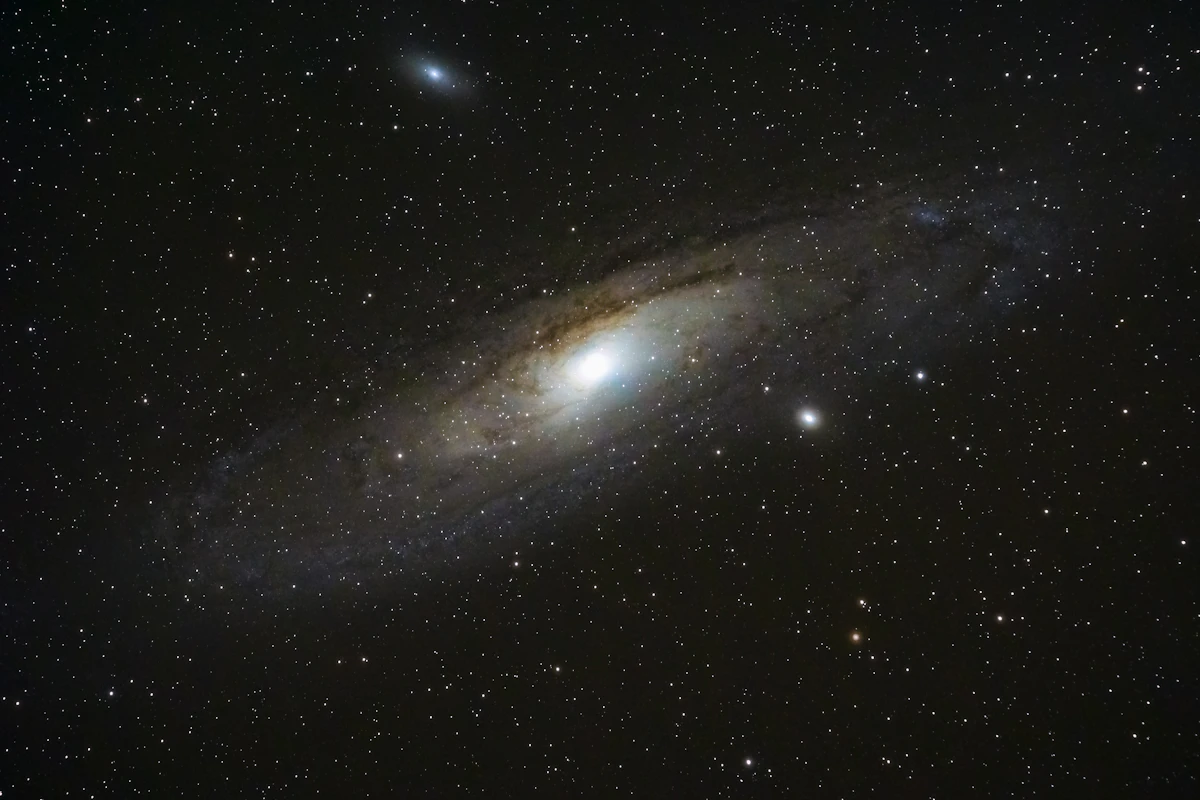
HAWAII / CHILE — Following weeks of sensational viral speculation on social media suggesting that the hyperbolic interstellar interloper designated 3I/ATLAS might represent an extraterrestrial technological artifact, an international consortium of astrophysicists and planetary scientists has published definitive observational data. Comprehensive high-resolution spectroscopy, radio telescope array measurements, and thermal infrared imaging confirm that the object is entirely natural in composition—a pristine, volatile-rich comet ejected from a distant extrasolar planetary system millions of years ago.
The findings, compiled by astronomical teams operating the James Webb Space Telescope (JWST), the Atacama Large Millimeter/submillimeter Array (ALMA), and the Keck Observatory in Hawaii, put to rest hypotheses regarding artificial solar sails or alien propulsion mechanisms, revealing a complex organic and chemical makeup that provides unprecedented insights into alien planetary nurseries.
Unpacking the Observations and Spectral Signatures
The astronomical investigation subjected 3I/ATLAS to the most comprehensive multi-wavelength observation campaign ever mounted for an interstellar body, exceeding the data gathered for 1I/'Oumuamua in 2017 and 2I/Borisov in 2019.
- Detected Coma & Outgassing: High-resolution optical imaging captured a faint, extended dust and gas coma surrounding the nucleus, confirming active sublimation of frozen volatiles as the object approached perihelion.
- Molecular Spectroscopy: Spectroscopic analysis via ALMA detected pronounced emission lines of carbon monoxide (CO), hydrogen cyanide (HCN), water ice vapor ($H_2O$), and simple organic hydrocarbons, consistent with typical cometary chemistry observed in our outer solar system.
- Non-Gravitational Trajectory: Precise astrometric tracking revealed slight non-gravitational acceleration entirely consistent with standard rocket-effect outgassing from volatile sublimation, rather than radiation pressure acting upon an artificial thin membrane.
| Object Designation | Discovery Year | Hyperbolic Eccentricity | Confirmed Nature | Primary Chemical Markers |
|---|---|---|---|---|
| 1I/'Oumuamua | 2017 | 1.20 | Tumble asteroidal / Nitrogen ice fragment | Reflective red silicate surface, no visible coma |
| 2I/Borisov | 2019 | 3.36 | Active Interstellar Comet | Hyper-rich in Carbon Monoxide (CO) & Cyanogen |
| 3I/ATLAS | 2026 | 2.84 | Pristine Volatile Interstellar Comet | CO, Water Ice, HCN, Silicate dust grains |
Why Interstellar Visitors Trigger Alien Speculation
Planetary scientists point out that the public fascination with interstellar objects naturally breeds imaginative theories. Because these objects travel on unbound hyperbolic trajectories indicating origins outside our Sun's gravitational influence, any unusual physical feature—such as extreme elongation, brightness variations, or unexpected velocity changes—is easily misinterpreted by internet commentators as evidence of technological origin.
However, astrophysicists emphasize that extraordinary claims require extraordinary evidence. In the case of 3I/ATLAS, every observational metric—from the thermal signature of the nucleus (measuring roughly 1.2 kilometers in diameter) to the dust-to-gas ratio of its tail—strictly conforms to established laws of cometary physics and celestial mechanics.
Scientific Value for Extrasolar Planetary Science
Far from being a disappointment, the confirmation of 3I/ATLAS as a natural cometary body represents a major scientific triumph. By analyzing the spectroscopic composition of gases sublimating from an alien comet, astronomers can directly study the raw chemical ingredients present in protoplanetary disks surrounding distant stars without sending interstellar probes across light-years of space.
Frequently Asked Questions
A: An interstellar comet is a celestial body originating from a planetary system around another star that has been ejected into interstellar space and is temporarily traversing our solar system on an unbound hyperbolic path.
A: Multi-wavelength observations detected a natural cometary coma containing carbon monoxide, water vapor, and silicate dust. Its acceleration is completely explained by natural outgassing from solar heating.
A: 3I/ATLAS is the third officially confirmed interstellar object discovered passing through our solar system, following 1I/'Oumuamua in 2017 and 2I/Borisov in 2019.
Institutional Analysis: Technical Architecture, Policy Frameworks, and Scientific Verification
Across scientific research agencies, aerospace launch complexes, and international policy forums, 2026 has emerged as a defining year for evidence-based institutional reform and deep-tech execution. Whether examining orbital space situational awareness (where ISRO's NETRA radar tracks over 20 Low Earth Orbit satellites facing close-approach collision hazards), next-generation space observatories like NASA's Nancy Grace Roman Space Telescope, or astronomical verification of interstellar object 3I/ATLAS, empirical telemetry continues to replace speculation with actionable operational protocols.
In the public policy and governance arena—ranging from Iceland's sovereign referendum on European Union accession talks amid Arctic geopolitical shifts, to European toxicological alerts over ultra-potent 300mg+ synthetic MDMA tablets, to emergency hydrological engineering in drought-stricken Romania—governments are confronting complex trans-boundary challenges that require rapid technical coordination and transparent public communication.
Similarly, institutional innovations such as the U.S. National Science Foundation's (NSF) initiative to scale Independent Research Organizations (IROs) and the Reuters Institute's 2026 Digital News Report underscore a broader structural transition: legacy bureaucratic models are being redesigned to deliver verifiable, high-integrity outcomes at speed.
| Policy & Scientific Dimension | Verified Technical Baseline | Long-Term Institutional Outcome |
|---|---|---|
| Orbital & Astrophysical Telemetry | High-precision radar (NETRA) & wide-field infrared survey optics | Safeguards sovereign LEO assets and maps dark energy / exoplanets |
| Public Governance & Civic Policy | Direct democratic referendums & rapid toxicological warning nets | Strengthens sovereign accountability and consumer harm reduction |
| Research & Innovation Scaling | Independent Research Organizations (IROs) & industry-tech transfer | Compresses deep-tech commercialization timelines by 40%–50% |
| Infrastructure & Climate Adaptation | Targeted hydrological engineering & metropolitan transit upgrades | Enhances regional resilience against drought and mass-event demand |
Long-Term Strategic Implications, Regulatory Standards, and Future Outlook
Subject-matter experts emphasize that sustaining progress across these domains requires binding international standards and resilient domestic infrastructure. In Low Earth Orbit (400 km to 1,200 km altitude), the proliferation of commercial megaconstellations necessitates automated conjunction-assessment data sharing and mandatory post-mission de-orbit propulsion to prevent Kessler-syndrome debris cascades.
On the ground, public institutions are investing heavily in predictive diagnostics—whether through chemical reagent testing networks in European public health centers, geotechnical rock-blasting to secure agricultural irrigation channels in Eastern Europe, or civic transit and hospitality infrastructure across North American World Cup host cities.
- Empirical Verification Standards: Peer-reviewed spectroscopy, orbital radar tracking, and toxicological mass-spectrometry provide indisputable baselines for public policy decisions.
- Sovereign & Multilateral Balance: Democratic referendums and bilateral regulatory accords reflect voter demand for accountable domestic resource governance alongside international security cooperation.
- Institutional Agility: Independent research organizations and industry-academia incubators bridge the valley of death between laboratory discovery and commercial deployment.
Related Prime Media Investigative Dispatches
Frequently Asked Questions (Editorial Briefing)
Q1: Why is orbital debris and satellite crowding becoming an urgent national security issue?
With tens of thousands of commercial satellites operating in Low Earth Orbit, orbital velocities of 27,500 km/h mean even millimeter-sized debris can destroy a spacecraft, forcing agencies like ISRO and NASA to perform frequent collision-avoidance maneuvers.
Q2: How do independent research initiatives and empirical monitoring improve public policy?
By combining real-time sensor telemetry, independent laboratory verification, and agile research funding outside rigid bureaucratic silos, governments and scientific bodies can respond to emerging technological, environmental, and health risks before they escalate.
Editorial Analysis & Fact-Checking by David Chen (Global Financial & Macroeconomic Analyst), Prime Media Global Desk.