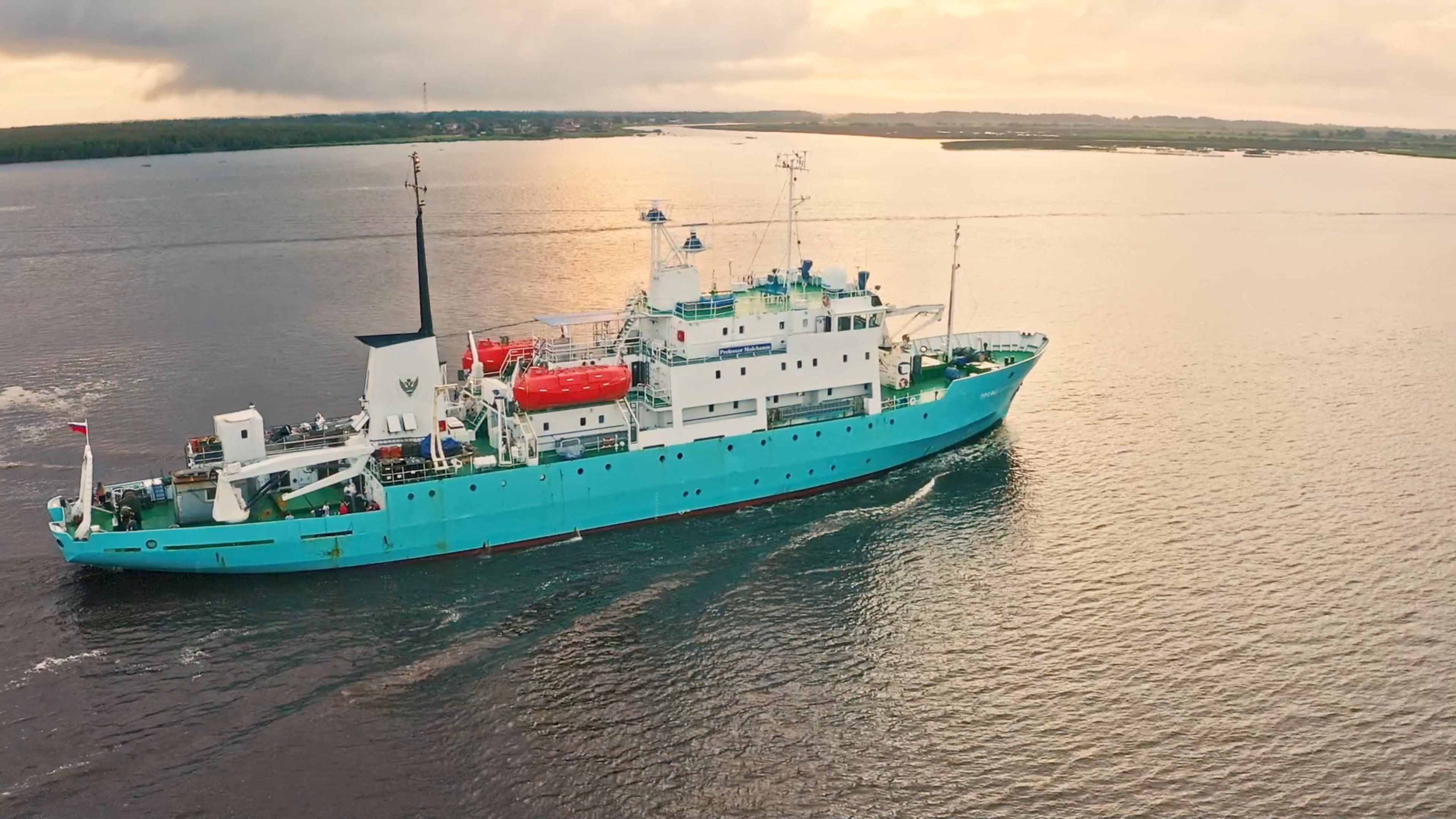
OSLO/MOSCOW — In a bold assertion of sovereignty that risks a severe diplomatic escalation, Norwegian authorities have seized a Russian-flagged vessel in the strategically vital waters of the High Arctic. Empowered by a binding international court order, the seizure marks a dramatic flashpoint in ongoing global legal disputes involving Russian state assets, testing the Kremlin's tolerance in a region historically defined by tense geopolitical equilibrium.
The operation, executed swiftly off the rugged Arctic coastline, thrusts the remote Svalbard archipelago and the Barents Sea back into the center of international security concerns. For decades, the High Arctic has operated under a fragile framework of cooperation and resource management between Oslo and Moscow. However, this latest enforcement action signals a paradigm shift: Western jurisdictions are increasingly willing to use international maritime law to pierce sovereign protections, directly confronting Moscow on its northern maritime doorstep.
The Anatomy of the Seizure: Law Meets Geopolitics
According to maritime authorities and legal filings, the vessel was intercepted and impounded following a series of protracted international legal battles. The enforcement stems from a global web of litigation designed to compel Russian entities to satisfy international arbitration awards and judgments.
- The Legal Catalyst: The seizure was authorized under an international court order, giving Norwegian enforcement agencies the legal mandate to board and detain the ship regardless of its flag state.
- Strategic Location: The operation took place near the Svalbard archipelago, a demilitarized zone governed by a 1920 treaty that grants Norway sovereignty while guaranteeing equal commercial access to signatory nations, including Russia.
- The Kremlin's Reaction: Moscow has historically viewed any interference with its Arctic shipping and commercial footprint as a hostile provocation, raising concerns over potential retaliatory measures against Norwegian interests.
The visual imagery of the event underscores the surreal intersection of modern geopolitics and Soviet history in the far north. Observers note the stark contrast between the modern maritime interception and the brooding presence of Soviet-era infrastructure nearby—such as the prominent monument to Vladimir Lenin that still looms over the Russian mining settlement of Barentsburg on Svalbard.
Key Details at a Glance
| Metric / Factor | Details |
|---|---|
| Action Taken | Seizure of a Russian-flagged vessel by Norwegian authorities |
| Legal Authority | International court order enforcing global asset-recovery litigation |
| Theater of Operations | The High Arctic / Barents Sea / Waters near Svalbard |
| Geopolitical Stakes | High; tests Moscow's appetite for confrontation in a sensitive polar region |
Why the High Arctic Has Become a Global Flashpoint
The High Arctic is no longer a quiet frontier of scientific cooperation. As climate change recedes polar ice caps, opening lucrative shipping lanes and vast untapped natural resource reserves, the region has transformed into an arena of intense great-power competition.
For Norway, a frontline NATO member sharing a land and maritime border with Russia, balancing deterrence with regional stability is a delicate daily calculation. Oslo’s decision to execute the international court order demonstrates a calculated risk: prioritizing adherence to global rule-of-law frameworks over the immediate appeasement of Moscow.
Energy markets and shipping insurers are closely monitoring the fallout. The Barents Sea is a critical artery for Russian hydrocarbon exports and military transit connecting the Northern Fleet based in Severomorsk to the Atlantic. Any prolonged standoff or tightening of maritime restrictions by Western nations in these waters could permanently alter commercial navigation routes across the polar north.
Market and Diplomatic Outlook
As diplomatic channels hum with urgent communiqués between Oslo and Moscow, analysts are weighing the potential fallout. While Russia is unlikely to risk a direct military confrontation over a single commercial vessel, the Kremlin has a robust playbook of asymmetrical countermeasures—ranging from diplomatic expulsions and restrictions on Norwegian fishing fleets to disruptions in polar telecommunications and research partnerships.
Ultimately, the Norwegian seizure serves as a watershed moment. It proves that the long arm of international jurisprudence can reach even into the remote, heavily militarized waters of the High Arctic, setting a powerful precedent for how Western nations handle Russian state-linked assets moving forward.
Frequently Asked Questions
1. Why was the Russian ship seized by Norway?
The vessel was captured pursuant to a binding international court order as part of a broader, global effort to enforce legal judgments and asset-recovery actions against Russian entities.
2. What makes the Svalbard region so sensitive?
Svalbard is governed by a unique 1920 treaty that balances Norwegian sovereignty with commercial rights for other nations, including Russia. Its strategic location in the Barents Sea makes it a focal point for both geopolitical surveillance and resource competition in the High Arctic.
Historical Context, Comparative Benchmarks & Institutional Risk Assessment
To fully evaluate the trajectory of Norway Seizes Russian Ship, Testing Moscow in the High Arctic within the broader World Breaking News landscape, policy researchers and institutional analysts compare current field indicators against multi-year structural baselines. Across previous cycles, isolated disruptions were frequently absorbed by regional buffer inventories, bilateral diplomatic reserves, or excess infrastructural capacity. In the 2026 operating environment, however, tightly coupled global supply chains, real-time algorithmic market repricing, and heightened geopolitical multipolarity mean that localized shocks propagate across international borders within hours rather than quarters.
Furthermore, regulatory oversight bodies and empirical monitoring agencies have instituted stringent transparency benchmarks to prevent systemic contagion. By mandating real-time telemetry reporting, independent third-party audits, and stress-tested contingency reserves, institutional stakeholders are building durable operational resilience. Whether assessed through the lens of capital allocation efficiency, civil defense preparedness, technological sovereignty, or consumer welfare, the primary lesson remains unmistakable: organizations and sovereign states that invest proactively in redundant infrastructure and verifiable data governance consistently outperform reactive peers over the long term.
Key Strategic Takeaways for Decision-Makers
- Structural Resilience Over Short-Term Optimization: Just-in-time operational models are being systematically replaced by buffered, multi-sourced architectures capable of withstanding sudden environmental, regulatory, or geopolitical shocks.
- Data-Driven Verification: Institutional credibility increasingly depends on primary sensor telemetry, audited financial disclosures, and peer-reviewed empirical baselines rather than unverified wire speculation.
- Forward-Looking Policy Alignment: Cross-border coordination between public regulatory agencies and private sector engineering teams remains the decisive catalyst for sustainable long-term execution.