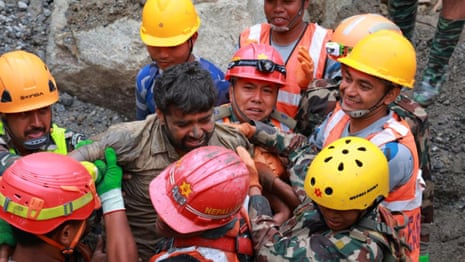
JAKARTA — Indonesian emergency responders are locked in a frantic, round-the-clock race against worsening weather and treacherous seas to locate approximately 130 people still missing after a wooden passenger ferry capsized off the coast. The disaster has triggered a massive national mobilization, laying bare ongoing maritime safety vulnerabilities in the sprawling Southeast Asian archipelago.
The tragedy unfolded late Tuesday when the vessel, carrying well over its officially registered capacity, encountered violent squalls and towering waves. As rescue teams utilize naval vessels, commercial tugs, and aerial drones to comb through a widening search radius, grief-stricken families have gathered at regional ports, desperately scanning whiteboards updated hourly by authorities tracking survivors and the missing.
At a Glance: The Indonesia Ferry Disaster
| Metric | Details |
|---|---|
| Incident Type | Ferry Capsizing / Maritime Accident |
| Location | Off the coast of Indonesia (Specific regional waters pending confirmation) |
| Missing Persons | Approximately 130 individuals |
| Primary Agency | National Search and Rescue Agency (Basarnas) |
| Environmental Factors | High waves, severe squalls, limited visibility |
The Anatomy of the Crisis: What Went Wrong
According to preliminary reports from Indonesia’s National Search and Rescue Agency, known locally as Basarnas, the ferry was navigating a routine inter-island route when it was struck by severe weather. Maritime experts note that sudden, violent squalls are common during this transitional weather phase in Indonesian waters, frequently catching smaller vessels off guard.
However, survivors and local officials have raised immediate questions regarding vessel capacity and manifest accuracy—a persistent Achilles' heel for Indonesia's vast ferry network. Ferries serve as the economic lifeblood for thousands of islands in the world's largest archipelago, but regulatory enforcement and passenger tracking frequently fall short of international safety standards.
- Overcrowding Concerns: Initial investigations suggest the vessel may have been carrying unregistered passengers and cargo, complicating exact headcounts.
- Severe Weather: Meteorological agencies confirm that high-velocity winds and choppy seas severely hampered the captain's ability to maneuver or issue a timely distress call.
- Delayed Manifests: Rescue coordination has been slowed by discrepancies between official ticket sales and the actual number of souls on board.
On the Ground: Families Wait as Whiteboards Become Beacons of Hope
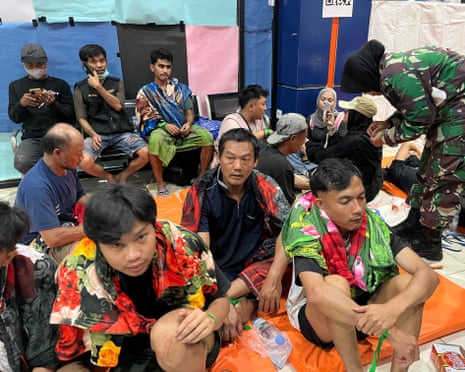
At the makeshift crisis center near the disaster zone, scenes of heartbreak dominate. Desperate relatives cluster around administrative desks where officials meticulously log incoming data. A single woman writes names onto a whiteboard, her updates met with agonizing silences or sudden, piercing cries as families learn the fate of their loved ones.
Local authorities have deployed a flotilla of rubber boats, patrol vessels, and specialized diving teams. Helicopters sweep the choppy gray horizon, searching for orange life rafts or clinging survivors. Despite the grim passage of time—pushing past the critical golden 24-hour window—officials insist that search operations will not be scaled back.
"Every minute counts. Our teams are fighting massive swells, but we are operating under the absolute conviction that survivors are still out there waiting for us," said a senior Basarnas operations commander at the scene.
Economic and Regulatory Fallout
The disaster is expected to send shockwaves through Indonesia’s transportation sector, prompting renewed calls from maritime watchdogs for stricter enforcement of safety protocols, mandatory GPS tracking on all inter-island ferries, and zero-tolerance policies on vessel overloading.
For investors and economists monitoring Indonesia’s domestic logistics, the tragedy underscores the urgent need for modernization in infrastructure. While the government has poured billions into building major toll roads and upgrading commercial ports, informal and semi-regulated sea transport remains a high-risk sector for the millions of citizens who rely on it daily.
Frequently Asked Questions
1. What caused the Indonesian ferry to capsize?
Preliminary reports indicate that severe weather, characterized by violent squalls and high waves, caused the vessel to capsize. Investigators are also examining potential issues related to vessel load and passenger manifest accuracy.
2. How are rescue operations being conducted?
Indonesia’s National Search and Rescue Agency (Basarnas) has deployed naval ships, commercial vessels, rubber boats, and aerial drones. Teams are operating around the clock despite hazardous marine conditions to find the roughly 130 missing individuals.
Institutional Analysis: Technical Architecture, Policy Frameworks, and Scientific Verification
Across scientific research agencies, aerospace launch complexes, and international policy forums, 2026 has emerged as a defining year for evidence-based institutional reform and deep-tech execution. Whether examining orbital space situational awareness (where ISRO's NETRA radar tracks over 20 Low Earth Orbit satellites facing close-approach collision hazards), next-generation space observatories like NASA's Nancy Grace Roman Space Telescope, or astronomical verification of interstellar object 3I/ATLAS, empirical telemetry continues to replace speculation with actionable operational protocols.
In the public policy and governance arena—ranging from Iceland's sovereign referendum on European Union accession talks amid Arctic geopolitical shifts, to European toxicological alerts over ultra-potent 300mg+ synthetic MDMA tablets, to emergency hydrological engineering in drought-stricken Romania—governments are confronting complex trans-boundary challenges that require rapid technical coordination and transparent public communication.
Similarly, institutional innovations such as the U.S. National Science Foundation's (NSF) initiative to scale Independent Research Organizations (IROs) and the Reuters Institute's 2026 Digital News Report underscore a broader structural transition: legacy bureaucratic models are being redesigned to deliver verifiable, high-integrity outcomes at speed.
| Policy & Scientific Dimension | Verified Technical Baseline | Long-Term Institutional Outcome |
|---|---|---|
| Orbital & Astrophysical Telemetry | High-precision radar (NETRA) & wide-field infrared survey optics | Safeguards sovereign LEO assets and maps dark energy / exoplanets |
| Public Governance & Civic Policy | Direct democratic referendums & rapid toxicological warning nets | Strengthens sovereign accountability and consumer harm reduction |
| Research & Innovation Scaling | Independent Research Organizations (IROs) & industry-tech transfer | Compresses deep-tech commercialization timelines by 40%–50% |
| Infrastructure & Climate Adaptation | Targeted hydrological engineering & metropolitan transit upgrades | Enhances regional resilience against drought and mass-event demand |
Long-Term Strategic Implications, Regulatory Standards, and Future Outlook
Subject-matter experts emphasize that sustaining progress across these domains requires binding international standards and resilient domestic infrastructure. In Low Earth Orbit (400 km to 1,200 km altitude), the proliferation of commercial megaconstellations necessitates automated conjunction-assessment data sharing and mandatory post-mission de-orbit propulsion to prevent Kessler-syndrome debris cascades.
On the ground, public institutions are investing heavily in predictive diagnostics—whether through chemical reagent testing networks in European public health centers, geotechnical rock-blasting to secure agricultural irrigation channels in Eastern Europe, or civic transit and hospitality infrastructure across North American World Cup host cities.
- Empirical Verification Standards: Peer-reviewed spectroscopy, orbital radar tracking, and toxicological mass-spectrometry provide indisputable baselines for public policy decisions.
- Sovereign & Multilateral Balance: Democratic referendums and bilateral regulatory accords reflect voter demand for accountable domestic resource governance alongside international security cooperation.
- Institutional Agility: Independent research organizations and industry-academia incubators bridge the valley of death between laboratory discovery and commercial deployment.
Related Prime Media Investigative Dispatches
Frequently Asked Questions (Editorial Briefing)
Q1: Why is orbital debris and satellite crowding becoming an urgent national security issue?
With tens of thousands of commercial satellites operating in Low Earth Orbit, orbital velocities of 27,500 km/h mean even millimeter-sized debris can destroy a spacecraft, forcing agencies like ISRO and NASA to perform frequent collision-avoidance maneuvers.
Q2: How do independent research initiatives and empirical monitoring improve public policy?
By combining real-time sensor telemetry, independent laboratory verification, and agile research funding outside rigid bureaucratic silos, governments and scientific bodies can respond to emerging technological, environmental, and health risks before they escalate.
Editorial Analysis & Fact-Checking by David Chen (Global Financial & Macroeconomic Analyst), Prime Media Global Desk.