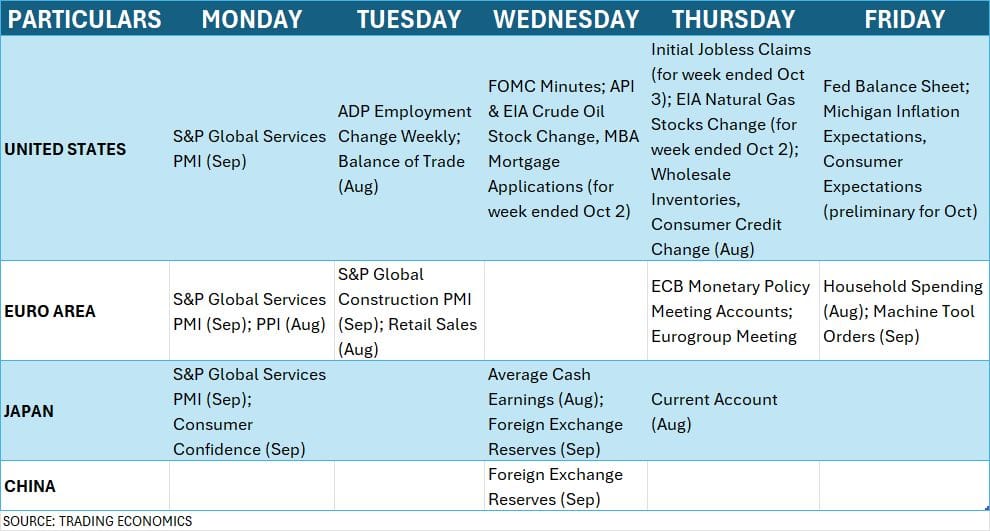
NEW YORK — U.S. stock futures ticked upward on Sunday evening, signaling a tentative attempt at recovery after a grueling week of trading that saw the Dow Jones Industrial Average log its third consecutive weekly loss. Investors are bracing for a high-stakes week dominated by crucial retail earnings, housing sector indicators, and mounting questions over the Federal Reserve’s interest rate path.
As of 6:30 PM ET, Dow Jones Industrial Average futures rose by 62 points, or 0.15%. S&P 500 futures edged up by 0.18%, while Nasdaq 100 futures gained 0.22%. The marginal gains reflect a cautious optimism on Wall Street as market participants look to shake off the stubborn selling pressure that has defined early-season trading.
The Retrenchment: Inside the Three-Week Slump
The blue-chip Dow’s recent slide highlights a broader recalibration of risk across global markets. What began as a highly enthusiastic post-election rally has run headfirst into macroeconomic reality: sticky inflation, resilient consumer spending, and a Federal Reserve that appears increasingly comfortable keeping interest rates elevated for longer than previously anticipated.
Last week, all three major benchmarks closed in negative territory. The Dow lost more than 1.2% over the five-day period, marking its third straight weekly decline. The S&P 500 and the tech-heavy Nasdaq Composite also retreated, pulled down by a spike in Treasury yields and a post-earnings hangover in major technology names.
"We are seeing a classic tug-of-war between robust economic growth and the monetary policy consequences of that growth," said Quincy Krosby, Chief Global Strategist at LPL Financial. "The market had priced in a aggressive rate-cut cycle. Now that the Fed is signaling a slower, more deliberate approach, equity valuations are being forced to reset."
Key Market Levels and Futures Indicators

To understand the current market architecture, investors are keeping a close eye on technical support levels. The table below outlines where the major indices stood at the close of Friday's cash session, alongside the initial movement in Sunday's futures market.
| Index | Friday Close Value | Weekly Performance | Sunday Futures Change | Key Technical Level to Watch |
|---|---|---|---|---|
| Dow Jones Industrial Avg. (DJIA) | 43,444.99 | -1.24% | +0.15% | 43,000 (Psychological Support) |
| S&P 500 (SPX) | 5,870.62 | -2.08% | +0.18% | 5,800 (50-Day Moving Average) |
| Nasdaq Composite (IXIC) | 18,680.12 | -3.15% | +0.22% | 18,400 (Support Zone) |
What is Driving the Market Anxiety?
The primary catalyst behind the market's recent retreat is the shift in fixed-income markets. The yield on the 10-year U.S. Treasury note briefly touched its highest level in months last week, hovering near 4.45%. When bond yields rise, equities—particularly high-growth technology companies—tend to lose their luster, as future corporate earnings are discounted at a higher rate.
Furthermore, Federal Reserve Chairman Jerome Powell sent shockwaves through trading desks last Thursday during a speech in Dallas, stating that the central bank is "not in any hurry to rush" rate cuts. Powell pointed to a remarkably resilient labor market and robust consumer demand as reasons why the Fed can afford to take its time.
According to the CME Group's FedWatch Tool, the probability of a 25-basis-point rate cut at the Fed's upcoming December meeting has dropped significantly. Just a month ago, a December cut was viewed as a near-certainty; it now hovers around a coin-toss probability.
The Week Ahead: Retail Giants and Macro Data
If Wall Street is to mount a sustained recovery this week, it will need a strong showing from corporate America and favorable macroeconomic data. Several major trends are poised to drive trading volume over the next five days:
- The Consumer Pulse (Retail Earnings): Crucial quarterly results from retail heavyweights like Walmart and Target will offer a definitive look at consumer spending health ahead of the critical holiday shopping season. If these giants report strong margins and optimistic guidance, it could soothe fears of an impending slowdown.
- The Housing Market: Reports on housing starts and existing home sales are scheduled for release later this week. Because the housing sector is highly sensitive to mortgage rates, these figures will provide a direct read on how elevated borrowing costs are impacting main street.
Macroeconomic Transmission, Institutional Capital Flows, and Sectoral Valuation Multiples
Global equity and commodity markets in late 2026 are navigating a delicate equilibrium between resilient corporate earnings growth and structural cost pressures across energy, semiconductors, and international trade corridors. On Dalal Street, the sharp upward trajectory of the BSE Sensex and NSE Nifty 50—frequently surging 450 to 890 points in single sessions—reflects powerful domestic institutional inflows (DIIs) anchored by systematic investment plans (SIPs) exceeding ₹23,000 crore monthly, alongside a stable monetary policy stance from the Reserve Bank of India (RBI).
On Wall Street and across East Asian tech bourses, however, institutional portfolio managers are applying far stricter valuation discipline to the artificial intelligence and semiconductor hardware complex. While foundational model breakthroughs—such as Alibaba's latest Qwen architecture and next-generation enterprise reasoning agents—continue to lower inference costs per token, hardware supply chains face crosswinds from export control recalibrations, high-bandwidth memory (HBM3e/HBM4) allocation bottlenecks at SK Hynix, and hyperscaler capital expenditure scrutiny.
Meanwhile, in the real physical economy, freight and logistics operators are grappling with diesel fuel prices exceeding $6.00 per gallon in key North American corridors due to distillate refinery maintenance and geopolitical crude risk premiums. Because heavy class-8 trucking moves over 72% of domestic retail and agricultural freight by tonnage, elevated middle-distillate costs transmit directly into core consumer price inflation (CPI) with a 60-to-90-day lag.
Market & Macro Indicator Current Benchmark Reading Portfolio & Economic Transmission Impact Indian Equity Benchmarks (Sensex / Nifty) Nifty sustained above 24,250–24,650 zone Driven by RBI rate stability, banking credit growth & domestic SIP inflows AI & Semiconductor Hardware Complex High dispersion across HBM memory & open-weight LLMs Rewards vertically integrated chipmakers and efficient model architectures U.S. Ultra-Low-Sulfur Diesel (ULSD) Surpassing $6.00/gal in key freight corridors Increases long-haul LTL/FTL freight surcharges & food distribution costs Global Sovereign Bond Yields (10Y) Stabilizing as central banks pause tightening cycles Supports equity valuation multiples in financials and industrials Central Bank Liquidity, Bond Yield Curves, and Portfolio Risk Allocation
Fixed-income strategists highlight that sovereign 10-year bond yields remain the primary gravity well governing equity price-to-earnings (P/E) multiples. When central banks hold benchmark repo and federal funds rates steady while core inflation moderates, rate-sensitive sectors—including private-sector banking, capital goods, automotive manufacturing, and commercial infrastructure—experience immediate balance-sheet relief and credit expansion.
- Semiconductor Capex Rotation: Institutional funds are rotating from overextended momentum software plays into profitable foundry, memory (HBM), and data-center power grid equipment suppliers.
- Freight & Distillate Hedging: Major retail supply chains are accelerating intermodal rail conversion and fleet aerodynamics upgrades to offset $6+/gallon ultra-low-sulfur diesel (ULSD) surcharges.
- Emerging Market Outperformance: Domestic consumption-driven economies with robust foreign exchange reserves continue to attract long-only sovereign wealth allocations despite global trade tariff friction.
Related Prime Media Investigative Dispatches
Frequently Asked Questions (Editorial Briefing)
Q1: What is driving the resilience of Indian stock benchmarks like Sensex and Nifty during global volatility?
Strong domestic institutional buying powered by record monthly mutual fund SIP inflows, stable RBI monetary policy rates, and healthy corporate balance sheets in banking and infrastructure insulate domestic equities from short-term global shocks.
Q2: Why do high diesel prices impact everyday consumer goods more than gasoline prices?
Diesel powers heavy freight trucks, freight locomotives, agricultural harvesters, and maritime barges. When diesel exceeds $6 a gallon, carriers add fuel surcharges that raise the landed cost of groceries, building materials, and retail inventory.
Editorial Analysis & Fact-Checking by Sarah Jenkins (Senior Technology & AI Correspondent), Prime Media Global Desk.