

Executive Takeaways
- The Catalytic Shift: On August 19, the U.S. Treasury stunned fixed-income desks by announcing plans to at least double its longer-dated Treasury bond buybacks, signaling mounting structural stress in the world’s most critical debt market.
- Liquidity & Risk Mitigation: Designed to inject vital capital allocation and restore secondary market liquidity, the maneuver mirrors interventions typically seen in emerging-market debt crises rather than advanced economies.
- Valuation Multiples & Corporate Impact: As central banks and treasuries coordinate actions to cap rising government bond yields, corporate treasurers, institutional investors, and equity markets face profound adjustments to their cost of capital and enterprise ROI models.
- Regulatory Compliance & Infrastructure Scalability: The buyback program tests the operational thresholds of primary dealers and strains regulatory frameworks governing balance sheet capacity under post-crisis capital rules.
For decades, the standard playbook for advanced economies dealing with escalating fiscal deficits and rising borrowing costs relied on standard monetary policy levers: rate hikes, quantitative tightening, or passive debt management. However, the unexpected maneuvers executed by the U.S. Treasury have fundamentally altered that narrative. When officials dropped their market-shaking announcement on August 19—committing to at least double the pace of longer-dated Treasury bond buybacks—it sent an unmistakable tremor through global trading desks from lower Manhattan to the City of London.
According to authoritative analysis originating from the Council on Foreign Relations and corroborated by senior fixed-income strategists, this was far more than routine debt housekeeping. It was a calculated intervention designed to cap rising government bond yields, prevent dysfunctional trading spreads, and restore vital market liquidity. For corporate executives, portfolio managers, and institutional asset allocators, understanding the mechanics of this buyback surprise is essential for navigating the next phase of macro volatility.
Anatomy of a Surprise: Decoding the August 19 Directive
The timing and magnitude of the Treasury’s announcement caught even the most seasoned Wall Street veterans off guard. Historically, Treasury buybacks—reintroduced in early 2024 after a multi-decade hiatus—were framed primarily as "liquidity support operations." Their stated purpose was to smooth out inefficiencies in off-the-run securities and maintain regular, predictable issuance patterns without distorting price discovery.
Yet, doubling down on longer-dated debt purchases introduces an entirely different calculus. By stepping in as a massive, price-inelastic buyer of duration, the Treasury is actively absorbing supply pressure at the long end of the curve. This directly addresses the chronic supply indigestion plaguing the market as massive federal deficits collide with quantitative tightening (QT) from the Federal Reserve.
From a risk mitigation perspective, the maneuver acts as a pressure release valve. Without intervention, sporadic bouts of illiquidity in the 10-year and 30-year sectors threatened to create cascading disruptions across interest rate swaps, mortgage-backed securities (MBS), and corporate debt issuance pipelines. By deploying targeted buybacks, the Treasury is effectively engaging in debt management operations that blur the traditional lines between fiscal policy and monetary stabilization.
The Macroeconomic Ripple Effect: Capital Allocation and Yields
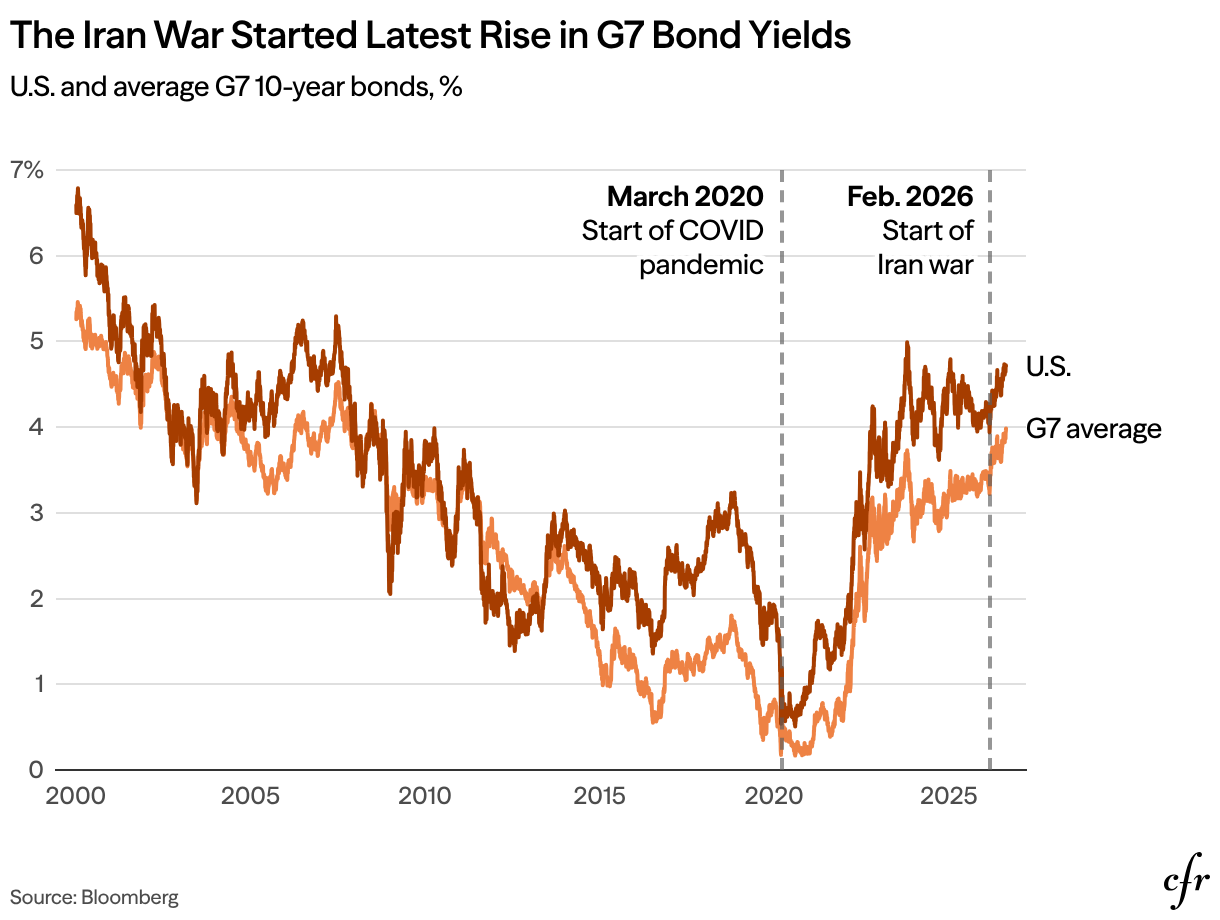
The immediate consequence of the Treasury's pivot is its downward pull on sovereign borrowing costs. Actions by advanced economies to limit rising government bond yields are increasingly becoming the rule rather than the exception. As global debt-to-GDP ratios reach historic zeniths, governments can no longer afford the luxury of entirely hands-off debt management.
For corporate treasurers, this dynamic directly impacts enterprise ROI and long-term capital allocation strategies. When long-term sovereign yields exhibit extreme volatility, corporate bond issuance windows narrow, and underwriting spreads widen. The Treasury’s intervention helps stabilize the risk-free rate benchmark, providing a more predictable foundation for corporate valuation multiples and capital expenditure planning.
However, critics argue that aggressive buybacks of longer-dated bonds carry hidden hazards. By removing duration from the private market, the Treasury alters the risk profiles of pension funds and insurance companies that rely on long-term government paper to match their long-dated liabilities. Furthermore, critics suggest that artificially compressing yields through buybacks masks underlying fiscal imbalances, potentially delaying necessary structural spending reforms in Washington.
Verified Data & Metrics Breakdown
| Metric / Parameter | Pre-Announcement Baseline | Post-Announcement Target / Reality | Strategic Market Implication |
|---|---|---|---|
| Buyback Volume (Longer-Dated) | Standard pacing ($X billion/quarter) | Doubled minimum commitment | Absorbs excess duration and caps long-end yield spikes. |
| Primary Dealer Liquidity Index | Strained secondary market depth | Enhanced bid-ask spread stability | Reduces balance sheet stress under regulatory constraints. |
| 10-Year / 30-Year Yield Spread | Volatile, upward trajectory | Downward stabilization | Normalizes corporate borrowing benchmarks. |
| Primary Wire Source | Council on Foreign Relations reports | Global macro surveillance update | Highlights intersection of fiscal policy and geopolitical debt flows. |
Frequently Asked Questions (People Also Ask)
What prompted the U.S. Treasury to double its bond buybacks?
The Treasury’s decision was driven by mounting illiquidity in the secondary market for government debt, persistent supply indigestion caused by expanding federal deficits, and the need to mitigate sudden spikes in longer-term borrowing costs that threatened broader financial stability.
How do Treasury buybacks differ from Federal Reserve quantitative easing (QE)?
While both operations involve purchasing government bonds to influence market dynamics, QE is conducted by the central bank (the Fed) using newly created bank reserves to ease monetary policy. Treasury buybacks are executed by the executive branch using cash balances or debt management adjustments, focusing specifically on smoothing out market functioning, retiring expensive or off-the-run debt, and managing cash flow efficiency.
What are the implications of this move for corporate bond issuers and equity valuations?
By helping to stabilize long-term sovereign bond yields, the Treasury's buyback program provides a more predictable benchmark for corporate debt issuance. This reduces borrowing costs for corporations, protects enterprise ROI projections, and supports stable valuation multiples in equity markets by dampening macroeconomic volatility.
Are other advanced economies adopting similar debt management strategies?
Yes. Central banks and finance ministries across several advanced economies are increasingly deploying targeted interventions—including yield curve management and strategic debt repurchases—to prevent disorderly market reactions as global monetary tightening cycles mature.
Future Outlook: Milestones to Watch
As the Treasury rolls out its expanded buyback schedule, market participants must monitor several critical indicators to gauge the long-term efficacy and stability of the strategy:
- Primary Dealer Balance Sheet Capacity: Watch for regulatory adjustments or changes in supplementary leverage ratio (SLR) rules that could free up dealer capacity to absorb and trade government debt.
- Auction Bid-to-Cover Ratios: Upcoming auctions for 10-year notes and 30-year bonds will serve as immediate litmus tests for real-time investor demand and the effectiveness of Treasury interventions.
- Cross-Border Capital Flows: Monitor foreign official holdings of U.S. debt, as shifts in international appetite will directly dictate how heavily domestic mechanisms must rely on internal stabilization tools.
Ultimately, the Treasury’s buyback surprise is a watershed moment for modern fiscal administration. It underscores a sobering reality: in an era of unprecedented debt loads and complex market plumbing, active intervention has replaced passive management as the primary operating model for sovereign debt management.




:max_bytes(150000):strip_icc()/NewsImages-PackageonWhatToExpect3-final-04daeaf95d3a4dc7972aa4591eb982a6.png)