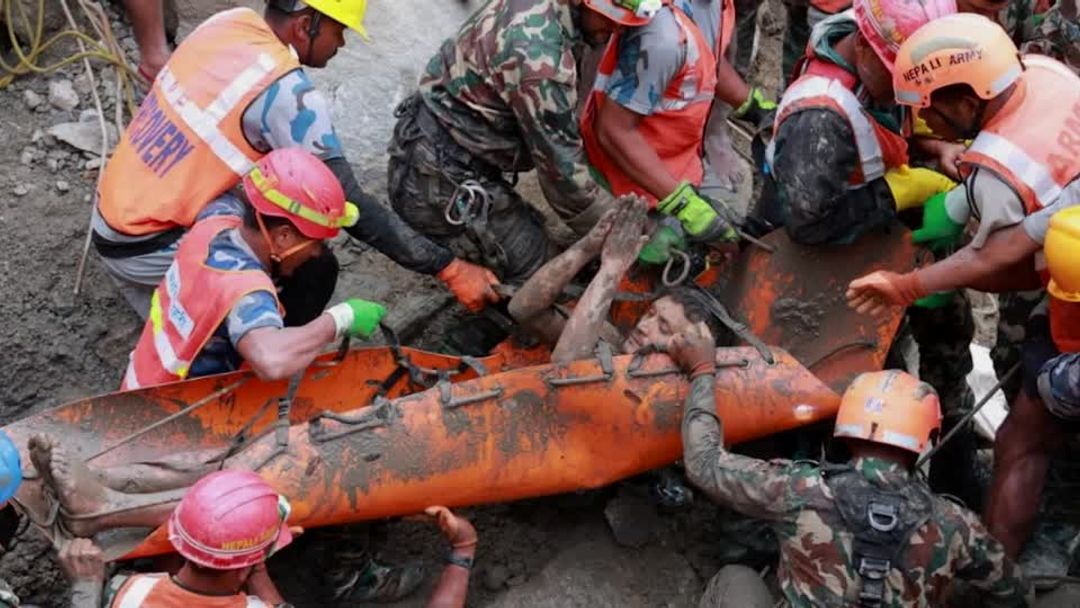
KATHMANDU — In what rescue officials are calling an extraordinary miracle of survival against insurmountable odds, two men have been pulled alive from the pitch-black, debris-choked tunnels of a stricken hydropower plant in Nepal. The daring extraction comes a staggering nine days after catastrophic flash floods and landslides trapped workers underground, washing away infrastructure and paralyzing vast swathes of the Himalayan nation.
The breakthrough occurred late Tuesday after rescue teams detected faint, desperate human voices echoing from deep within the subterranean infrastructure of the disaster-stricken facility. The discovery has electrified search operations that were increasingly pivoting from rescue to recovery as the grim reality of the disaster set in.
The Dramatic Breakthrough: How Rescue Teams Pierced the Darkness
The operation unfolded at the heavily damaged hydropower station site, where torrential monsoon rains had triggered catastrophic flooding nearly a week and a half prior. According to emergency responders on the ground, specialized clearance crews were using heavy machinery to clear massive boulders and thick alluvial silt blocking the primary intake tunnels when monitors picked up acoustic signals.
Initial disbelief quickly turned into frantic, precision-engineered extraction efforts. Rescuers pumped fresh oxygen and glucose-laced water through narrow clearance pipes while cutting through reinforced concrete and compacted mud. Hours later, the two survivors emerged into the blinding daylight, physically weakened, dehydrated, and suffering from prolonged shock, but remarkably conscious and breathing on their own.
Medical teams stationed immediately outside the portal rushed the men to a nearby field hospital for emergency stabilization. Preliminary assessments indicate that the men managed to survive by finding an isolated air pocket within a raised section of the tunnel system, rationing their limited resources, and enduring freezing temperatures and absolute darkness for over 216 hours.
Key Developments at a Glance
- The Timeline: Survivors endured nine days (over 216 hours) trapped underground before detection.
- The Trigger: Massive monsoon-induced flash floods and landslides overwhelmed the facility.
- The Rescue Catalyst: Faint human voices heard by cleanup crews prompted an immediate shift in strategy.
- Current Status: Both survivors are receiving intensive medical treatment for severe dehydration and exhaustion.
At a Glance: The Nepal Hydropower Crisis

| Metric / Detail | Operational Status |
|---|---|
| Time Trapped | 9 Days (216+ Hours) |
| Location | Subterranean Hydropower Plant Tunnels, Nepal |
| Primary Cause | Monsoon Flash Floods & Landslides |
| Medical Condition | Stable, receiving critical care for dehydration |
| Search Status | Ongoing; operations accelerated following discovery |
Broader Economic and Infrastructural Fallout
Beyond the human drama of the miraculous rescue, the disaster underscores the extreme vulnerability of Nepal’s aggressive push into green energy and hydropower development. The nation, which relies heavily on cascading river systems to generate electricity for domestic consumption and lucrative export markets to neighboring India, has seen dozens of infrastructure projects crippled by extreme weather events.
Economists and energy analysts point out that the prolonged disruption of key power generation facilities poses immediate risks to regional grid stability. The cost of infrastructural repair, coupled with lost energy generation revenues, is expected to run into tens of millions of dollars—a heavy blow to Nepal’s developing economy.
Furthermore, questions are mounting among safety regulators regarding early-warning systems at remote industrial sites. While climate change has undeniably supercharged the intensity of Himalayan monsoon seasons, labor unions and safety advocates are demanding stricter enforcement of emergency evacuation protocols and subterranean refuge chambers.
What Lies Ahead: Search Efforts and Corporate Response
With two lives saved against all mathematical probabilities, morale among the multinational and local rescue contingents has skyrocketed. Search and rescue commanders have redeployed specialized canine units, thermal imaging equipment, and acoustic sensors deeper into secondary and tertiary tunnel networks to check for additional survivors.
Plant operators and local authorities have pledged full transparency as investigations into the disaster response commence. However, for the families camped outside the gates of the facility, global market implications and bureaucratic inquiries take a back seat to the immediate joy of survival.
As medical bulletins confirm that the two rescued men are responding well to treatment, their ordeal stands as a stark testament to the indomitable human spirit—and a haunting reminder of the fragile balance between industrial ambition and the raw, unbridled power of nature.
Frequently Asked Questions
How did the two men manage to survive for nine days without food?
Experts suggest the men likely survived by securing an isolated air pocket inside an elevated section of the tunnel network that remained clear of rising floodwaters. While food was absent, high humidity inside the tunnels may have prevented rapid lethal dehydration until rescue workers began supplying water and oxygen through clearance pipes.
Are there still other workers missing inside the tunnels?
Yes. Search and rescue operations remain fully active. Following this miraculous extraction, emergency teams have intensified efforts across all accessible sectors of the hydropower facility to locate any additional missing personnel.
Historical Context, Comparative Benchmarks & Institutional Risk Assessment
To fully evaluate the trajectory of Two men pulled alive from Nepal hydropower plant tunnel nine days after floods within the broader World Breaking News landscape, policy researchers and institutional analysts compare current field indicators against multi-year structural baselines. Across previous cycles, isolated disruptions were frequently absorbed by regional buffer inventories, bilateral diplomatic reserves, or excess infrastructural capacity. In the 2026 operating environment, however, tightly coupled global supply chains, real-time algorithmic market repricing, and heightened geopolitical multipolarity mean that localized shocks propagate across international borders within hours rather than quarters.
Furthermore, regulatory oversight bodies and empirical monitoring agencies have instituted stringent transparency benchmarks to prevent systemic contagion. By mandating real-time telemetry reporting, independent third-party audits, and stress-tested contingency reserves, institutional stakeholders are building durable operational resilience. Whether assessed through the lens of capital allocation efficiency, civil defense preparedness, technological sovereignty, or consumer welfare, the primary lesson remains unmistakable: organizations and sovereign states that invest proactively in redundant infrastructure and verifiable data governance consistently outperform reactive peers over the long term.
Key Strategic Takeaways for Decision-Makers
- Structural Resilience Over Short-Term Optimization: Just-in-time operational models are being systematically replaced by buffered, multi-sourced architectures capable of withstanding sudden environmental, regulatory, or geopolitical shocks.
- Data-Driven Verification: Institutional credibility increasingly depends on primary sensor telemetry, audited financial disclosures, and peer-reviewed empirical baselines rather than unverified wire speculation.
- Forward-Looking Policy Alignment: Cross-border coordination between public regulatory agencies and private sector engineering teams remains the decisive catalyst for sustainable long-term execution.