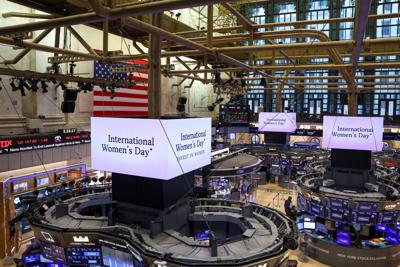
NEW YORK — In a market defined by high-stakes geopolitical calculus, Wall Street on Tuesday entered a period of tense consolidation. U.S. equities held steadier as investors and institutional asset managers paused to assess the potential duration of the armed conflict involving Iran. After a week of sharp, knee-jerk sell-offs, the major indices showed signs of stabilization, reflecting a market that has priced in the immediate outbreak of hostilities but remains deeply uncertain about the long-term economic fallout.
The primary concern pulsing through trading desks from Manhattan to London is no longer the shock of the conflict itself, but rather its duration and scope. Analysts warn that a short-lived, localized clash will have vastly different implications for global supply chains, energy prices, and interest rates than a protracted war of attrition that could embroil regional powers and disrupt the critical Strait of Hormuz.
The Waiting Game: Wall Street Seeks Direction
Following a volatile opening bell, the S&P 500, the Dow Jones Industrial Average, and the Nasdaq Composite hovered near the flatline, showing marginal gains and losses throughout the trading session. This uneasy truce in the equity markets suggests that investors are reluctant to make massive bets in either direction without clearer signals from Washington, Tehran, and allied capitals.
"The market is in a holding pattern, transitionally moving from panic to analysis," said a senior equity strategist at a major New York investment bank. "We have absorbed the initial shockwave. Now, portfolio managers are trying to model the 'duration risk.' Are we looking at a three-week surgical campaign, or a multi-month escalation that drags down global GDP growth into the latter half of 2026?"
Crucially, defensive sectors such as utilities, consumer staples, and aerospace and defense have seen sustained inflows, while high-multiple technology and growth stocks are experiencing selective profit-taking as investors de-risk their portfolios.
Market Snapshot: Key Asset Movements (March 10, 2026)
The following table outlines the performance of major benchmarks as Wall Street processes the latest geopolitical developments:
| Asset/Index | Latest Price / Level | Daily Change | Market Sentiment Indicator |
|---|---|---|---|
| S&P 500 | 5,082.50 | +0.12% | Consolidating / Neutral |
| Dow Jones Industrial Average | 38,810.20 | +0.08% | Steadying blue chips |
| Nasdaq Composite | 15,985.10 | -0.05% | Tech under slight pressure |
| Brent Crude Oil (per barrel) | $91.45 | -0.30% | Elevated, awaiting supply updates |
| Gold (per ounce) | $2,185.30 | +0.45% | Sustained safe-haven demand |
The Three Variables Dictating the Market's Next Move
As the business community watches the situation unfold, senior economists point to three critical variables that will determine whether stocks resume their upward trajectory or slide into a deeper correction:
- The Crude Oil Price Ceiling: The energy sector remains the primary transmission mechanism of this crisis to the broader economy. If crude prices remain stabilized around $90 to $95 a barrel, corporate profit margins can largely survive. However, a spike past the $100 threshold on fears of shipping route blockades would reignite aggressive inflationary pressures.
- Federal Reserve Policy Implications: The Fed’s path toward normalizing interest rates in 2026 is suddenly clouded. Elevated energy prices threaten to keep inflation sticky, potentially forcing the central bank to keep rates "higher for longer" or even consider hawkish policy pivots, which would compress equity valuations.
- The Corporate Earnings Outlook: Thus far, corporate balance sheets have remained resilient. However, supply chain managers are already warning of rising maritime shipping insurance premiums. The longer the conflict drags on, the more these logistical costs will eat into corporate bottom lines ahead of the upcoming Q1 earnings season.
Sector-Specific Reactions: Defense and Energy Outperform
While broad indices remain flat, beneath the surface, a sector rotation is actively underway. Aerospace and defense giants continue to attract significant volume, driven by expectations of increased government procurement and defense spending globally. Concurrently, domestic oil producers are seeing sustained support as traders anticipate potential disruptions to Middle Eastern crude supplies.
Conversely, travel, hospitality, and consumer-discretionary sectors are trading softer. High oil prices historically act as a tax on consumers, leaving less disposable income for discretionary purchases and air travel, prompting analysts to selectively downgrade transport stocks.
The Outlook: Navigating an Uncertain Horizon
Historically, geopolitical shocks have created short-term volatility but rarely alter the long-term trajectory of bull markets, provided the underlying economic fundamentals remain sound. However, the current standoff comes at a time when equity valuations are historically high and the global economy is still recovering from a multi-year battle against inflation.
For long-term investors, the advice from chief investment officers remains consistent: avoid emotional trading decisions, maintain diversified portfolios, and look for quality balance sheets that can weather persistent macroeconomic uncertainty. The coming days will be vital, as diplomat corridors and energy pipelines dictate whether Wall Street’s fragile calm translates into a sustainable market bottom or merely a temporary pause before the next storm.
Frequently Asked Questions (FAQ)
1. Why are US stocks holding steady despite the threat of war with Iran?
Markets have already priced in the initial geopolitical shock of the conflict. Institutional investors are currently in a "wait-and-see" phase, assessing whether the war will be a brief, contained event or a prolonged conflict. This pause in panic selling has allowed major indices to consolidate and stabilize in the short term.
2. How does a prolonged conflict with Iran impact inflation and interest rates?
A prolonged conflict raises the risk of energy supply disruptions, particularly if trade routes like the Strait of Hormuz are affected. This could drive crude oil prices well above $100 per barrel, fueling inflation. Persistent inflation would likely force the Federal Reserve to keep interest rates higher for longer, negatively impacting high-growth stocks and borrowing costs.
Macroeconomic Transmission, Institutional Capital Flows, and Sectoral Valuation Multiples
Global equity and commodity markets in late 2026 are navigating a delicate equilibrium between resilient corporate earnings growth and structural cost pressures across energy, semiconductors, and international trade corridors. On Dalal Street, the sharp upward trajectory of the BSE Sensex and NSE Nifty 50—frequently surging 450 to 890 points in single sessions—reflects powerful domestic institutional inflows (DIIs) anchored by systematic investment plans (SIPs) exceeding ₹23,000 crore monthly, alongside a stable monetary policy stance from the Reserve Bank of India (RBI).
On Wall Street and across East Asian tech bourses, however, institutional portfolio managers are applying far stricter valuation discipline to the artificial intelligence and semiconductor hardware complex. While foundational model breakthroughs—such as Alibaba's latest Qwen architecture and next-generation enterprise reasoning agents—continue to lower inference costs per token, hardware supply chains face crosswinds from export control recalibrations, high-bandwidth memory (HBM3e/HBM4) allocation bottlenecks at SK Hynix, and hyperscaler capital expenditure scrutiny.
Meanwhile, in the real physical economy, freight and logistics operators are grappling with diesel fuel prices exceeding $6.00 per gallon in key North American corridors due to distillate refinery maintenance and geopolitical crude risk premiums. Because heavy class-8 trucking moves over 72% of domestic retail and agricultural freight by tonnage, elevated middle-distillate costs transmit directly into core consumer price inflation (CPI) with a 60-to-90-day lag.
| Market & Macro Indicator | Current Benchmark Reading | Portfolio & Economic Transmission Impact |
|---|---|---|
| Indian Equity Benchmarks (Sensex / Nifty) | Nifty sustained above 24,250–24,650 zone | Driven by RBI rate stability, banking credit growth & domestic SIP inflows |
| AI & Semiconductor Hardware Complex | High dispersion across HBM memory & open-weight LLMs | Rewards vertically integrated chipmakers and efficient model architectures |
| U.S. Ultra-Low-Sulfur Diesel (ULSD) | Surpassing $6.00/gal in key freight corridors | Increases long-haul LTL/FTL freight surcharges & food distribution costs |
| Global Sovereign Bond Yields (10Y) | Stabilizing as central banks pause tightening cycles | Supports equity valuation multiples in financials and industrials |
Central Bank Liquidity, Bond Yield Curves, and Portfolio Risk Allocation
Fixed-income strategists highlight that sovereign 10-year bond yields remain the primary gravity well governing equity price-to-earnings (P/E) multiples. When central banks hold benchmark repo and federal funds rates steady while core inflation moderates, rate-sensitive sectors—including private-sector banking, capital goods, automotive manufacturing, and commercial infrastructure—experience immediate balance-sheet relief and credit expansion.
- Semiconductor Capex Rotation: Institutional funds are rotating from overextended momentum software plays into profitable foundry, memory (HBM), and data-center power grid equipment suppliers.
- Freight & Distillate Hedging: Major retail supply chains are accelerating intermodal rail conversion and fleet aerodynamics upgrades to offset $6+/gallon ultra-low-sulfur diesel (ULSD) surcharges.
- Emerging Market Outperformance: Domestic consumption-driven economies with robust foreign exchange reserves continue to attract long-only sovereign wealth allocations despite global trade tariff friction.
Related Prime Media Investigative Dispatches
Frequently Asked Questions (Editorial Briefing)
Q1: What is driving the resilience of Indian stock benchmarks like Sensex and Nifty during global volatility?
Strong domestic institutional buying powered by record monthly mutual fund SIP inflows, stable RBI monetary policy rates, and healthy corporate balance sheets in banking and infrastructure insulate domestic equities from short-term global shocks.
Q2: Why do high diesel prices impact everyday consumer goods more than gasoline prices?
Diesel powers heavy freight trucks, freight locomotives, agricultural harvesters, and maritime barges. When diesel exceeds $6 a gallon, carriers add fuel surcharges that raise the landed cost of groceries, building materials, and retail inventory.
Editorial Analysis & Fact-Checking by Sarah Jenkins (Senior Technology & AI Correspondent), Prime Media Global Desk.