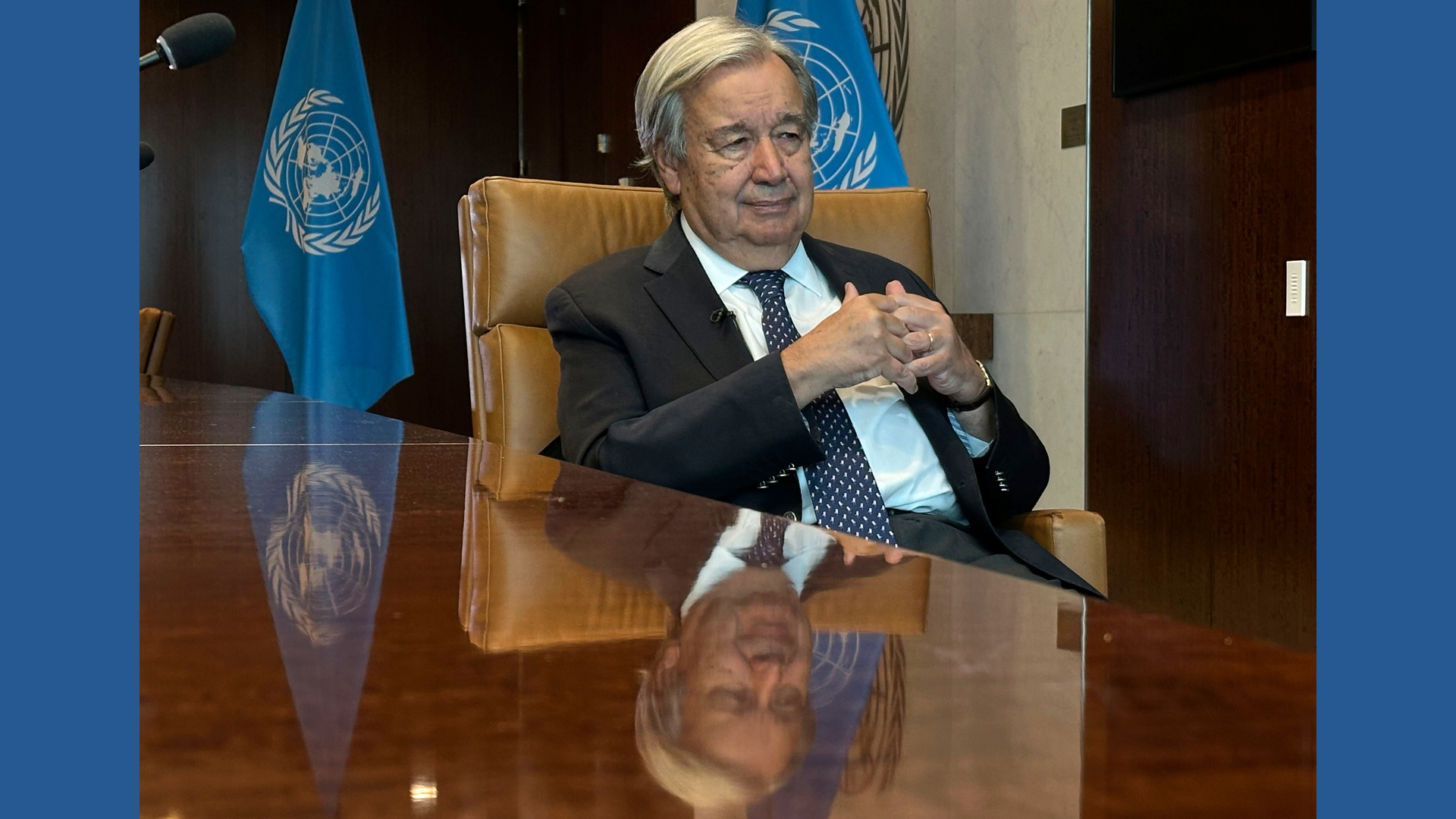
NEW YORK — As global power corridors shift and multilateralism faces its sternest test since the Cold War, heads of state, tech titans, and financial leaders converged at United Nations headquarters this week. The backdrop is nothing short of apocalyptic: a world fracturing under the weight of protracted conventional wars, deepening diplomatic chasms, unprecedented climate volatility, and the unchecked, accelerated deployment of artificial intelligence.
For financial markets, corporate boardrooms, and geopolitical strategists, this year’s UN General Assembly is not merely a diplomatic ritual. It is a high-stakes stress test for the global economy. With trade alliances like the US-Canada framework undergoing severe stress tests—exemplified by recent trade friction under figures like Donald Trump—and central banks wrestling with structural inflation driven by resource scarcity, the decisions made in Manhattan over the next 72 hours will dictate market trajectories for the decade.
The Four-Pronged Global Crisis
The convergence of systemic risks has created what policy analysts term a "poly-crisis." Unlike previous eras where economic shocks could be isolated from geopolitical friction, today’s disruptions are deeply intertwined. Supply chains are held hostage by climate anomalies, while sovereign debt levels in emerging markets soar as governments redirect capital toward defense and emergency disaster relief.
Furthermore, the rapid commercialization of runaway artificial intelligence has outpaced international regulatory frameworks, sparking acute anxieties over automated warfare, deepfake-driven political destabilization, and mass white-collar labor displacement. Global labor markets are already registering shocks, with major tech and financial institutions announcing targeted layoffs as predictive AI models absorb cognitive workloads.
- Geopolitical Fragmentation: Traditional alliances are fraying, with North American trade pacts and European security architectures facing unprecedented populist and nationalist pressures.
- The AI Wild West: The absence of binding global guardrails on generative and autonomous AI systems has triggered an unregulated arms race among superpowers and private conglomerates.
- Climate Economics: Record-shattering global temperatures and extreme weather events are causing multi-billion-dollar agricultural and infrastructure losses, directly impacting global food security and insurance markets.
- Economic Fallout: Persistent inflationary pressures, supply chain bifurcation, and cascading layoffs are dampening consumer confidence across developed economies.
Market Sentiment and Diplomatic Maneuvering

Behind closed doors in UN delegate lounges and executive suites across Midtown Manhattan, the mood is one of guarded anxiety. Equity markets have shown acute sensitivity to keynote speeches delivered by leaders from the world’s top economies, including representations from Beijing, Washington, and Brussels.
China’s leadership has emphasized the necessity of multilateral trade stability, attempting to position itself as a reliable anchor amid Western protectionism. Meanwhile, Western delegations are pushing hard for binding frameworks on emerging tech and coordinated financial support for climate-vulnerable nations.
However, analysts warn that rhetoric is running far ahead of actionable policy. "We are witnessing a profound disconnect between the velocity of technological and environmental disruption and the glacial pace of international diplomacy," noted a senior macroeconomic strategist attending the summit. "Investors are pricing in risks that political leaders are only beginning to acknowledge."
At a Glance: The Global Risk Matrix
| Crisis Domain | Primary Driver | Market Impact | Outlook |
|---|---|---|---|
| Artificial Intelligence | Unregulated generative models & automation | High workforce displacement; tech sector volatility | Regulatory push expected by Q4 |
| Climate Shocks | Extreme weather & agricultural disruptions | Spiking commodity prices; insurance market strain | Accelerated capital flight to green tech |
| Geopolitics | Fracturing US-Canada/EU ties & active conflict | Supply chain bifurcation; defense sector boom | Heightened sovereign risk |
| Labor Markets | AI integration & corporate cost-cutting | Targeted white-collar layoffs; wage stagnation fears | Structural restructuring underway |
What Comes Next for Global Markets
As the summit progresses, attention will pivot toward bilateral meetings and closed-door financial roundtables. Central bankers and finance ministers are holding emergency side-sessions to address liquidity risks tied to climate-induced sovereign downgrades and trade fragmentation.
For corporate executives and institutional investors, the mandate is clear: risk mitigation must evolve beyond traditional financial models. Supply chains must be re-engineered for resilience rather than pure efficiency, and compliance frameworks must prepare for sudden, sweeping regulatory interventions regarding artificial intelligence and carbon emissions.
The clock is ticking. Whether this high-level gathering will yield concrete multilateral treaties or devolve into another exercise in diplomatic theater remains the trillion-dollar question on Wall Street and beyond.
Frequently Asked Questions
Why is this year's UN General Assembly considered critical for global markets?
Unlike previous summits, this year’s gathering coincides with simultaneous systemic shocks—including runaway AI development, escalating climate disasters, and severe geopolitical fractures—that directly impact global supply chains, inflation, and corporate profitability.
How are markets responding to the technology and AI discussions at the UN?
Investors are closely monitoring potential regulatory announcements regarding artificial intelligence. While AI is driving massive capital expenditure and stock gains in the tech sector, fears over unconstrained deployment, labor displacement, and cybersecurity vulnerabilities are introducing significant volatility.
Historical Context, Comparative Benchmarks & Institutional Risk Assessment
To fully evaluate the trajectory of World leaders meet at UN as their planet grapples with war, division, runaway AI and climate shocks within the broader AI & Next-Gen Tech landscape, policy researchers and institutional analysts compare current field indicators against multi-year structural baselines. Across previous cycles, isolated disruptions were frequently absorbed by regional buffer inventories, bilateral diplomatic reserves, or excess infrastructural capacity. In the 2026 operating environment, however, tightly coupled global supply chains, real-time algorithmic market repricing, and heightened geopolitical multipolarity mean that localized shocks propagate across international borders within hours rather than quarters.
Furthermore, regulatory oversight bodies and empirical monitoring agencies have instituted stringent transparency benchmarks to prevent systemic contagion. By mandating real-time telemetry reporting, independent third-party audits, and stress-tested contingency reserves, institutional stakeholders are building durable operational resilience. Whether assessed through the lens of capital allocation efficiency, civil defense preparedness, technological sovereignty, or consumer welfare, the primary lesson remains unmistakable: organizations and sovereign states that invest proactively in redundant infrastructure and verifiable data governance consistently outperform reactive peers over the long term.
Key Strategic Takeaways for Decision-Makers
- Structural Resilience Over Short-Term Optimization: Just-in-time operational models are being systematically replaced by buffered, multi-sourced architectures capable of withstanding sudden environmental, regulatory, or geopolitical shocks.
- Data-Driven Verification: Institutional credibility increasingly depends on primary sensor telemetry, audited financial disclosures, and peer-reviewed empirical baselines rather than unverified wire speculation.
- Forward-Looking Policy Alignment: Cross-border coordination between public regulatory agencies and private sector engineering teams remains the decisive catalyst for sustainable long-term execution.