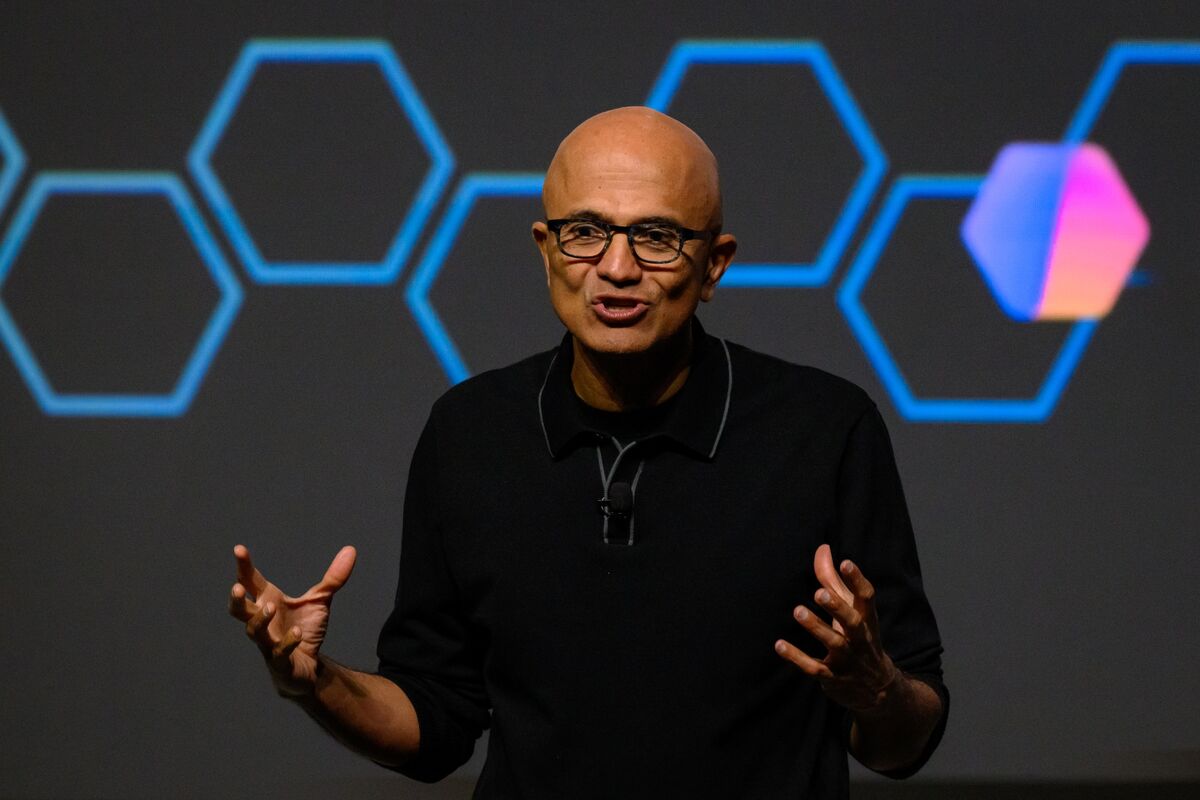
WASHINGTON & BEIJING — In an unprecedented convergence of geopolitical strategy and artificial intelligence supremacy, the world’s most influential tech titans are packing their bags for a high-stakes diplomatic summit. According to exclusive reporting from Bloomberg News, Microsoft Corp. Chief Executive Officer Satya Nadella is slated to join OpenAI CEO Sam Altman and Nvidia Corp. CEO Jensen Huang at a high-level dinner involving US President Donald Trump and Chinese President Xi Jinping.
The gathering, scheduled for late September 2026, places the architects of the global AI boom directly at the negotiation table of the world's two superpowers. As Washington and Beijing remain locked in a fierce, multi-front technological cold war over semiconductors, supply chains, and advanced computing dominance, the presence of Nadella, Altman, and Huang signals a dramatic shift: Big Tech is no longer just watching the regulatory landscape—they are actively helping to shape it.
The Ultimate Tech-Diplomacy Crossover
For months, tensions surrounding advanced artificial intelligence infrastructure have dictated global market sentiment. From export controls on high-end graphics processing units (GPUs) to intellectual property concerns and data security regulations, tech executives have found themselves navigating a bureaucratic minefield. This upcoming summit changes the dynamic entirely.
Industry insiders note that bringing the leaders of Microsoft (OpenAI’s primary financial and infrastructure backer), OpenAI (the pioneer of generative AI models), and Nvidia (the undisputed hardware kingpin powering the AI revolution) into the same room as Trump and Xi is a masterclass in high-stakes track-two diplomacy. The objective? To establish guardrails, ease supply chain friction, and prevent a catastrophic decoupling of the global technology ecosystem.
- The Hardware Giant: Nvidia's Jensen Huang brings the critical leverage of semiconductor supply, without which the global AI race grinds to a halt.
- The Cloud & Software Titan: Microsoft's Satya Nadella represents enterprise integration, massive data center scale, and strategic software deployment.
- The Frontier AI Pioneer: OpenAI's Sam Altman anchors the conversation on cutting-edge algorithmic capability, safety, and artificial general intelligence (AGI) trajectories.
Market Implications and Strategic Stakes

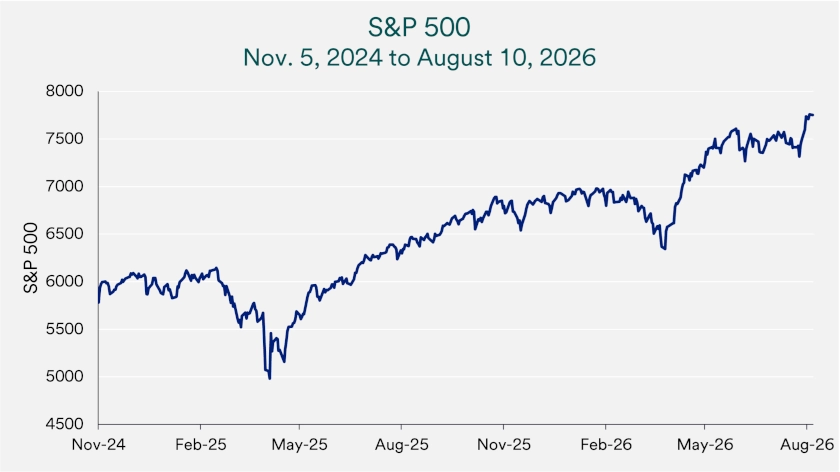
Wall Street and global financial markets are already pricing in the volatility and potential upside of the summit. Investors are eager to see whether the talks will lead to a relaxation of stringent US export restrictions on advanced chips destined for international markets, or if new frameworks for cross-border data governance will emerge.
The intersection of artificial intelligence and geopolitics has created a unique market environment where a single diplomatic communique can swing trillion-dollar valuations overnight. Below is a quick breakdown of the key stakeholders and their current strategic positions heading into the summit:
| Executive / Company | Primary Strategic Role | Key Stake in Trump-Xi Summit |
|---|---|---|
| Satya Nadella (Microsoft) | Enterprise Cloud & AI Infrastructure | Protecting global enterprise reach and cloud expansion |
| Sam Altman (OpenAI) | Frontier Model Development | Securing global talent, compute access, and market access |
| Jensen Huang (Nvidia) | Silicon Supply & Architecture | Navigating export controls and maintaining global chip dominance |
What This Means for the Future of AI
The inclusion of corporate executives in a bilateral meeting traditionally reserved for heads of state underscores a fundamental reality of the 21st century: national security and technological innovation are now inextricably linked. Governments can no longer regulate the digital frontier without the active participation of the engineers and executives building it.
As the dinner approaches, analysts expect both Washington and Beijing to use the venue to test the waters on cooperative AI safety measures, energy grid demands for data centers, and intellectual property protections. While deep-seated geopolitical rivalries will not vanish overnight, the mere presence of Nadella, Altman, and Huang suggests a mutual recognition that total technological isolation is a losing proposition for all parties involved.
Frequently Asked Questions
Why are Satya Nadella, Sam Altman, and Jensen Huang attending the Trump-Xi meeting?
The tech leaders are joining the high-level diplomatic dinner to provide industry expertise, address supply chain and semiconductor bottlenecks, and help bridge the gap between US and Chinese regulatory frameworks regarding artificial intelligence development and security.
What are the primary market takeaways from this upcoming summit?
Investors are closely watching for potential updates on US export controls for advanced AI semiconductors, international data-sharing agreements, and a reduction in geopolitical friction that could stabilize tech sector valuations globally.
Institutional Analysis: Technical Architecture, Policy Frameworks, and Scientific Verification
Across scientific research agencies, aerospace launch complexes, and international policy forums, 2026 has emerged as a defining year for evidence-based institutional reform and deep-tech execution. Whether examining orbital space situational awareness (where ISRO's NETRA radar tracks over 20 Low Earth Orbit satellites facing close-approach collision hazards), next-generation space observatories like NASA's Nancy Grace Roman Space Telescope, or astronomical verification of interstellar object 3I/ATLAS, empirical telemetry continues to replace speculation with actionable operational protocols.
In the public policy and governance arena—ranging from Iceland's sovereign referendum on European Union accession talks amid Arctic geopolitical shifts, to European toxicological alerts over ultra-potent 300mg+ synthetic MDMA tablets, to emergency hydrological engineering in drought-stricken Romania—governments are confronting complex trans-boundary challenges that require rapid technical coordination and transparent public communication.
Similarly, institutional innovations such as the U.S. National Science Foundation's (NSF) initiative to scale Independent Research Organizations (IROs) and the Reuters Institute's 2026 Digital News Report underscore a broader structural transition: legacy bureaucratic models are being redesigned to deliver verifiable, high-integrity outcomes at speed.
| Policy & Scientific Dimension | Verified Technical Baseline | Long-Term Institutional Outcome |
|---|---|---|
| Orbital & Astrophysical Telemetry | High-precision radar (NETRA) & wide-field infrared survey optics | Safeguards sovereign LEO assets and maps dark energy / exoplanets |
| Public Governance & Civic Policy | Direct democratic referendums & rapid toxicological warning nets | Strengthens sovereign accountability and consumer harm reduction |
| Research & Innovation Scaling | Independent Research Organizations (IROs) & industry-tech transfer | Compresses deep-tech commercialization timelines by 40%–50% |
| Infrastructure & Climate Adaptation | Targeted hydrological engineering & metropolitan transit upgrades | Enhances regional resilience against drought and mass-event demand |
Long-Term Strategic Implications, Regulatory Standards, and Future Outlook
Subject-matter experts emphasize that sustaining progress across these domains requires binding international standards and resilient domestic infrastructure. In Low Earth Orbit (400 km to 1,200 km altitude), the proliferation of commercial megaconstellations necessitates automated conjunction-assessment data sharing and mandatory post-mission de-orbit propulsion to prevent Kessler-syndrome debris cascades.
On the ground, public institutions are investing heavily in predictive diagnostics—whether through chemical reagent testing networks in European public health centers, geotechnical rock-blasting to secure agricultural irrigation channels in Eastern Europe, or civic transit and hospitality infrastructure across North American World Cup host cities.
- Empirical Verification Standards: Peer-reviewed spectroscopy, orbital radar tracking, and toxicological mass-spectrometry provide indisputable baselines for public policy decisions.
- Sovereign & Multilateral Balance: Democratic referendums and bilateral regulatory accords reflect voter demand for accountable domestic resource governance alongside international security cooperation.
- Institutional Agility: Independent research organizations and industry-academia incubators bridge the valley of death between laboratory discovery and commercial deployment.
Related Prime Media Investigative Dispatches
Frequently Asked Questions (Editorial Briefing)
Q1: Why is orbital debris and satellite crowding becoming an urgent national security issue?
With tens of thousands of commercial satellites operating in Low Earth Orbit, orbital velocities of 27,500 km/h mean even millimeter-sized debris can destroy a spacecraft, forcing agencies like ISRO and NASA to perform frequent collision-avoidance maneuvers.
Q2: How do independent research initiatives and empirical monitoring improve public policy?
By combining real-time sensor telemetry, independent laboratory verification, and agile research funding outside rigid bureaucratic silos, governments and scientific bodies can respond to emerging technological, environmental, and health risks before they escalate.
Editorial Analysis & Fact-Checking by Dr. Marcus Vance (Executive Editor & Investigative Policy Director), Prime Media Global Desk.