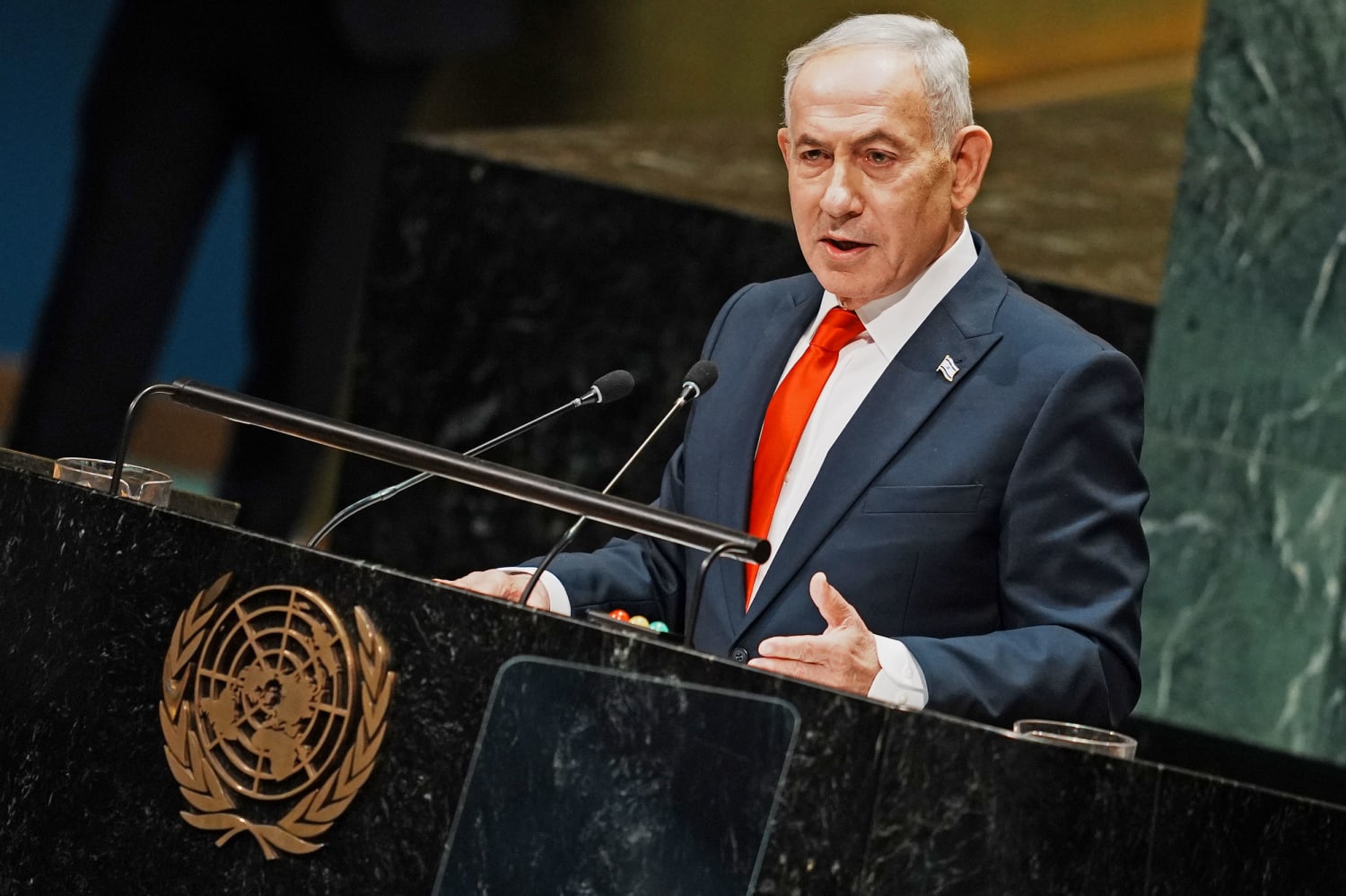
NEW YORK — In one of the most starkly polarized moments in recent diplomatic history, the United Nations General Assembly became the stage for a dual-track drama that perfectly encapsulates the chaotic state of modern geopolitics. From the main podium, Donald Trump issued an ultimatum of historic proportions, warning that the United States would "annihilate" Iran if it were linked to attacks on American citizens or political candidates. Yet, just floors away in the secure backrooms of the UN headquarters, high-ranking officials and intermediaries from both nations were quietly holding sideline discussions aimed at preventing an all-out regional war.
This striking contrast—public brinkmanship paired with private pragmatism—has sent shockwaves through global energy markets and left foreign policy analysts scrambling to decipher the true trajectory of U.S.-Iran relations.
Executive Summary: The Double-Edged Diplomacy
- The Public Threat: Trump used his address to declare that any foreign state involvement in attempts on U.S. political figures would result in the "annihilation" of the perpetrator, specifically pointing to intelligence briefs detailing Iranian plots.
- The Sideline Reality: Despite the fierce rhetoric, diplomats from Washington and Tehran engaged in quiet, Swiss-brokered backchannel discussions to establish crisis guardrails amid escalating Middle East tensions.
- Market Impact: Crude oil prices fluctuated sharply, reflecting trader anxiety over potential disruptions in the Strait of Hormuz balanced against the hope of a diplomatic breakthrough.
- The Strategic Stakes: Both nations are walking a tightrope: Trump must project absolute strength to his domestic base, while Iran seeks sanctions relief to rescue its suffocating economy without appearing to surrender.
The Podium Fire: "Annihilation" and the Red Lines of Deterrence

Speaking to a packed assembly of world leaders, Donald Trump delivered a speech that departed from traditional diplomatic niceties, focusing instead on hard power and deterrence. Citing recent intelligence briefings regarding Iranian plots targeting U.S. officials, Trump drew an unequivocal red line.
"If Iran harms a hair on the head of any American citizen, let alone a leader of our country, they will face total obliteration," Trump declared, his voice echoing through the green-marbled hall. "We will annihilate them. There will be no second chances, no warnings, and no negotiation after the fact."
The fiery rhetoric reflects a mounting frustration within U.S. intelligence agencies over Tehran’s asymmetric operations, including cyberattacks, disinformation campaigns, and alleged assassination plots targeting former administration officials. For Trump, the speech served a dual purpose: establishing a doctrine of extreme deterrence abroad while projecting a strongman image back home.
The Sideline Reality: Backchannels and Quiet Diplomacy
While the public-facing rhetoric pointed toward imminent conflict, the scene on the sidelines of the UNGA painted a vastly different, highly pragmatic picture. According to senior diplomatic sources, officials from the U.S. State Department and Iran’s Ministry of Foreign Affairs engaged in quiet, indirect consultations facilitated by European and Qatari intermediaries.
The agenda for these sideline talks was highly transactional, focusing on three core areas:
- De-escalation Guardrails: Establishing direct communication channels to prevent miscalculations in the Red Sea and the Levant, where Iranian-backed proxies continue to clash with Western coalition forces.
- The Nuclear File: Preliminary discussions on what a post-JCPOA (Joint Comprehensive Plan of Action) framework might look like, as Iran's uranium enrichment levels approach weapon-grade thresholds.
- Economic Relief vs. Hostage Diplomacy: Exploring potential avenues for targeted sanctions relief in exchange for the release of remaining dual-national detainees and a freeze on ballistic missile transfers.
An Eastern European diplomat, speaking on the condition of anonymity, summarized the paradox: "The public speeches are for the voters and the hardliners. The sideline meetings are for the survival of both regimes. Neither side can afford a full-scale war, and they both know it."
Economic Fallout: Markets React to the Geopolitical Whiplash
Global markets reacted with predictable volatility to the mixed signals emanating from New York. Brent crude futures initially spiked by 2.4% following Trump's "annihilate" remarks, as algorithms reacted to the high-stakes language. However, gains were quickly pared back as reports of the sideline meetings began to circulate among institutional investors.
The table below outlines the immediate market reactions and strategic posturing of both nations:
| Metric / Indicator | Public Rhetorical Stance (The Podium) | Private Diplomatic Reality (The Sidelines) | Market Impact / Outlook | ||||||||||||||
|---|---|---|---|---|---|---|---|---|---|---|---|---|---|---|---|---|---|
| Military Strategy | Threats of total annihilation, military mobilization. | Establish
Institutional Analysis: Technical Architecture, Policy Frameworks, and Scientific VerificationAcross scientific research agencies, aerospace launch complexes, and international policy forums, 2026 has emerged as a defining year for evidence-based institutional reform and deep-tech execution. Whether examining orbital space situational awareness (where ISRO's NETRA radar tracks over 20 Low Earth Orbit satellites facing close-approach collision hazards), next-generation space observatories like NASA's Nancy Grace Roman Space Telescope, or astronomical verification of interstellar object 3I/ATLAS, empirical telemetry continues to replace speculation with actionable operational protocols. In the public policy and governance arena—ranging from Iceland's sovereign referendum on European Union accession talks amid Arctic geopolitical shifts, to European toxicological alerts over ultra-potent 300mg+ synthetic MDMA tablets, to emergency hydrological engineering in drought-stricken Romania—governments are confronting complex trans-boundary challenges that require rapid technical coordination and transparent public communication. Similarly, institutional innovations such as the U.S. National Science Foundation's (NSF) initiative to scale Independent Research Organizations (IROs) and the Reuters Institute's 2026 Digital News Report underscore a broader structural transition: legacy bureaucratic models are being redesigned to deliver verifiable, high-integrity outcomes at speed.
Long-Term Strategic Implications, Regulatory Standards, and Future OutlookSubject-matter experts emphasize that sustaining progress across these domains requires binding international standards and resilient domestic infrastructure. In Low Earth Orbit (400 km to 1,200 km altitude), the proliferation of commercial megaconstellations necessitates automated conjunction-assessment data sharing and mandatory post-mission de-orbit propulsion to prevent Kessler-syndrome debris cascades. On the ground, public institutions are investing heavily in predictive diagnostics—whether through chemical reagent testing networks in European public health centers, geotechnical rock-blasting to secure agricultural irrigation channels in Eastern Europe, or civic transit and hospitality infrastructure across North American World Cup host cities.
Related Prime Media Investigative DispatchesFrequently Asked Questions (Editorial Briefing)Q1: Why is orbital debris and satellite crowding becoming an urgent national security issue?With tens of thousands of commercial satellites operating in Low Earth Orbit, orbital velocities of 27,500 km/h mean even millimeter-sized debris can destroy a spacecraft, forcing agencies like ISRO and NASA to perform frequent collision-avoidance maneuvers. Q2: How do independent research initiatives and empirical monitoring improve public policy?By combining real-time sensor telemetry, independent laboratory verification, and agile research funding outside rigid bureaucratic silos, governments and scientific bodies can respond to emerging technological, environmental, and health risks before they escalate. Editorial Analysis & Fact-Checking by Elena Rostova (Aerospace, Deep Science & Quantum Editor), Prime Media Global Desk.
Prime Media Editorial Policy: This reporting adheres to our strict accuracy, independent verification, and conflict-of-interest standards. Have a correction or news tip? Reach our Corrections Desk.
RECOMMENDED FOR YOUTRENDING STORIES |