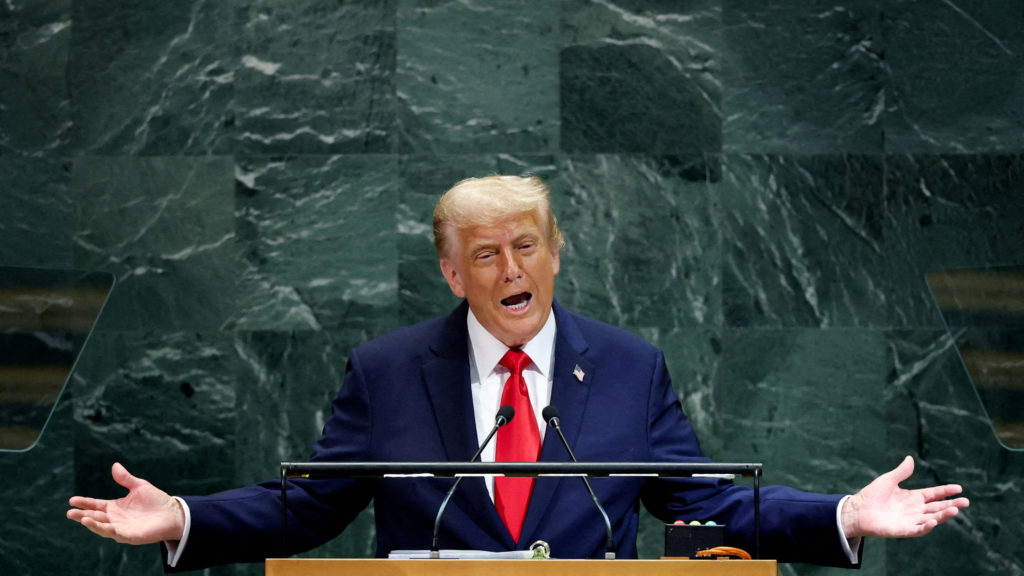
NEW YORK — In a moment of intense geopolitical friction and shifting global alliances, former U.S. President Donald Trump took to the global stage today, addressing the United Nations General Assembly before a packed hall of diplomats, heads of state, and international press. The high-profile address, streamed live to millions worldwide, serves as the anchor event for a dense sequence of bilateral meetings and closed-door negotiations in Midtown Manhattan.
The appearance has immediately dominated global markets and policy circles, sparking fierce debate over the future of multilateralism, international trade agreements, and ongoing security crises in Eastern Europe and the Middle East. As wire services scramble to report every nuance, analysts are parsing the address for signals on future U.S. foreign policy trajectories.
The Core Narrative: Rhetoric Meets Realpolitik
Standing before the iconic green marble podium of the General Assembly hall, Trump delivered a speech that leaned heavily into his signature "America First" doctrine while addressing the pressing vulnerabilities of the current global architecture. The address struck a balance between critique of international institutions and calls for sovereign accountability.
The timing of the speech is crucial. Global financial markets are currently navigating persistent inflation, volatile energy supply chains, and complex central bank maneuvers. Any shift in American foreign policy posture carries immediate consequences for currency valuations, defense equities, and emerging market debt.
- Sovereignty Focus: Emphasized national self-determination over supranational bureaucratic oversight.
- Economic Leverage: Highlighted the strategic use of tariffs, trade renegotiations, and bilateral deals.
- Global Security: Addressed ongoing conflicts, pressing European allies on defense spending, and demanding structural reforms within UN bodies.
- Diplomatic Circuit: Transitioned immediately from the podium to high-stakes, closed-door bilateral meetings with key international counterparts.
Market Reactions and Economic Implications
Economic and foreign policy desks at both The Wall Street Journal and the Economic Times have been monitoring the immediate fallout from the address. While geopolitical speeches often trigger short-term volatility in foreign exchange and commodity markets, institutional investors are looking deeper into the potential fallout for global supply chains.
International trade partners are particularly anxious regarding potential resurgences of aggressive tariff policies. Asian and European markets experienced minor fluctuations during the live broadcast, reflecting the delicate equilibrium of current global trade networks.
Key Issues Addressed at the Podium
| Policy Area | Primary Stance | Market/Global Impact |
|---|---|---|
| International Trade | Skepticism of multilateral pacts; preference for bilateral leverage. | Potential volatility in export-heavy sectors and currency markets. |
| Defense & Security | Strict burden-sharing demands for allied nations. | Increased focus on European and Asian defense manufacturing equities. |
| UN Reform | Criticism of institutional efficiency and funding allocation. | Intensified debate over the future structure of international governance. |
Behind Closed Doors: The Bilateral Agenda
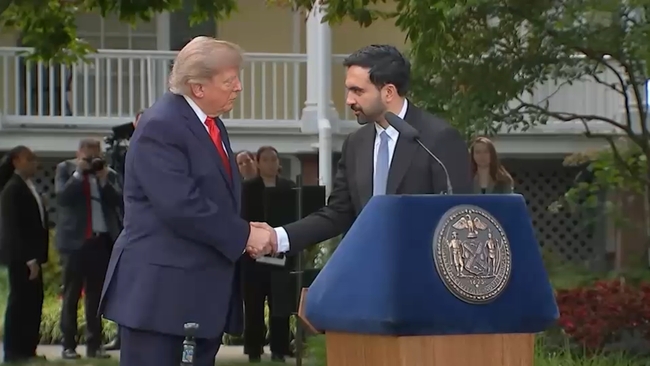
Following the plenary address, Trump’s itinerary shifts to a grueling series of private bilateral meetings. These diplomatic sessions—held in heavily secured suites across New York—are where the actual work of international relations is conducted. World leaders are reportedly using these face-to-face encounters to secure direct channels of communication, hedge against future geopolitical shifts, and negotiate terms on trade and security.
Foreign ministers and economic advisors accompanying the various delegations noted that private discussions are centered heavily on energy security, regional deterrence, and stabilizing bilateral economic corridors.
What Lies Ahead
As the U.N. General Assembly week unfolds, the ripple effects of today's address will dictate the diplomatic cadence in Washington, Brussels, Beijing, and beyond. Policymakers and market participants alike are advised to watch for follow-up announcements stemming from the afternoon bilateral meetings, which may offer concrete indicators of future policy shifts.
Stay tuned to our continuous live coverage as our editorial teams in New York, London, and New Delhi provide real-time analysis, expert commentary, and breaking updates on the unfolding global summit.
Frequently Asked Questions
What was the primary focus of the U.N. General Assembly address?
The speech focused heavily on national sovereignty, the reevaluation of multilateral trade agreements, demands for international allies to increase their defense spending, and structural critiques of global governing institutions.
How are global markets responding to the speech and subsequent meetings?
Markets have shown measured volatility, with currency traders and commodity investors closely monitoring potential shifts in U.S. trade policy and international relations.
Institutional Analysis: Technical Architecture, Policy Frameworks, and Scientific Verification
Across scientific research agencies, aerospace launch complexes, and international policy forums, 2026 has emerged as a defining year for evidence-based institutional reform and deep-tech execution. Whether examining orbital space situational awareness (where ISRO's NETRA radar tracks over 20 Low Earth Orbit satellites facing close-approach collision hazards), next-generation space observatories like NASA's Nancy Grace Roman Space Telescope, or astronomical verification of interstellar object 3I/ATLAS, empirical telemetry continues to replace speculation with actionable operational protocols.
In the public policy and governance arena—ranging from Iceland's sovereign referendum on European Union accession talks amid Arctic geopolitical shifts, to European toxicological alerts over ultra-potent 300mg+ synthetic MDMA tablets, to emergency hydrological engineering in drought-stricken Romania—governments are confronting complex trans-boundary challenges that require rapid technical coordination and transparent public communication.
Similarly, institutional innovations such as the U.S. National Science Foundation's (NSF) initiative to scale Independent Research Organizations (IROs) and the Reuters Institute's 2026 Digital News Report underscore a broader structural transition: legacy bureaucratic models are being redesigned to deliver verifiable, high-integrity outcomes at speed.
| Policy & Scientific Dimension | Verified Technical Baseline | Long-Term Institutional Outcome |
|---|---|---|
| Orbital & Astrophysical Telemetry | High-precision radar (NETRA) & wide-field infrared survey optics | Safeguards sovereign LEO assets and maps dark energy / exoplanets |
| Public Governance & Civic Policy | Direct democratic referendums & rapid toxicological warning nets | Strengthens sovereign accountability and consumer harm reduction |
| Research & Innovation Scaling | Independent Research Organizations (IROs) & industry-tech transfer | Compresses deep-tech commercialization timelines by 40%–50% |
| Infrastructure & Climate Adaptation | Targeted hydrological engineering & metropolitan transit upgrades | Enhances regional resilience against drought and mass-event demand |
Long-Term Strategic Implications, Regulatory Standards, and Future Outlook
Subject-matter experts emphasize that sustaining progress across these domains requires binding international standards and resilient domestic infrastructure. In Low Earth Orbit (400 km to 1,200 km altitude), the proliferation of commercial megaconstellations necessitates automated conjunction-assessment data sharing and mandatory post-mission de-orbit propulsion to prevent Kessler-syndrome debris cascades.
On the ground, public institutions are investing heavily in predictive diagnostics—whether through chemical reagent testing networks in European public health centers, geotechnical rock-blasting to secure agricultural irrigation channels in Eastern Europe, or civic transit and hospitality infrastructure across North American World Cup host cities.
- Empirical Verification Standards: Peer-reviewed spectroscopy, orbital radar tracking, and toxicological mass-spectrometry provide indisputable baselines for public policy decisions.
- Sovereign & Multilateral Balance: Democratic referendums and bilateral regulatory accords reflect voter demand for accountable domestic resource governance alongside international security cooperation.
- Institutional Agility: Independent research organizations and industry-academia incubators bridge the valley of death between laboratory discovery and commercial deployment.
Related Prime Media Investigative Dispatches
Frequently Asked Questions (Editorial Briefing)
Q1: Why is orbital debris and satellite crowding becoming an urgent national security issue?
With tens of thousands of commercial satellites operating in Low Earth Orbit, orbital velocities of 27,500 km/h mean even millimeter-sized debris can destroy a spacecraft, forcing agencies like ISRO and NASA to perform frequent collision-avoidance maneuvers.
Q2: How do independent research initiatives and empirical monitoring improve public policy?
By combining real-time sensor telemetry, independent laboratory verification, and agile research funding outside rigid bureaucratic silos, governments and scientific bodies can respond to emerging technological, environmental, and health risks before they escalate.
Editorial Analysis & Fact-Checking by Elena Rostova (Aerospace, Deep Science & Quantum Editor), Prime Media Global Desk.