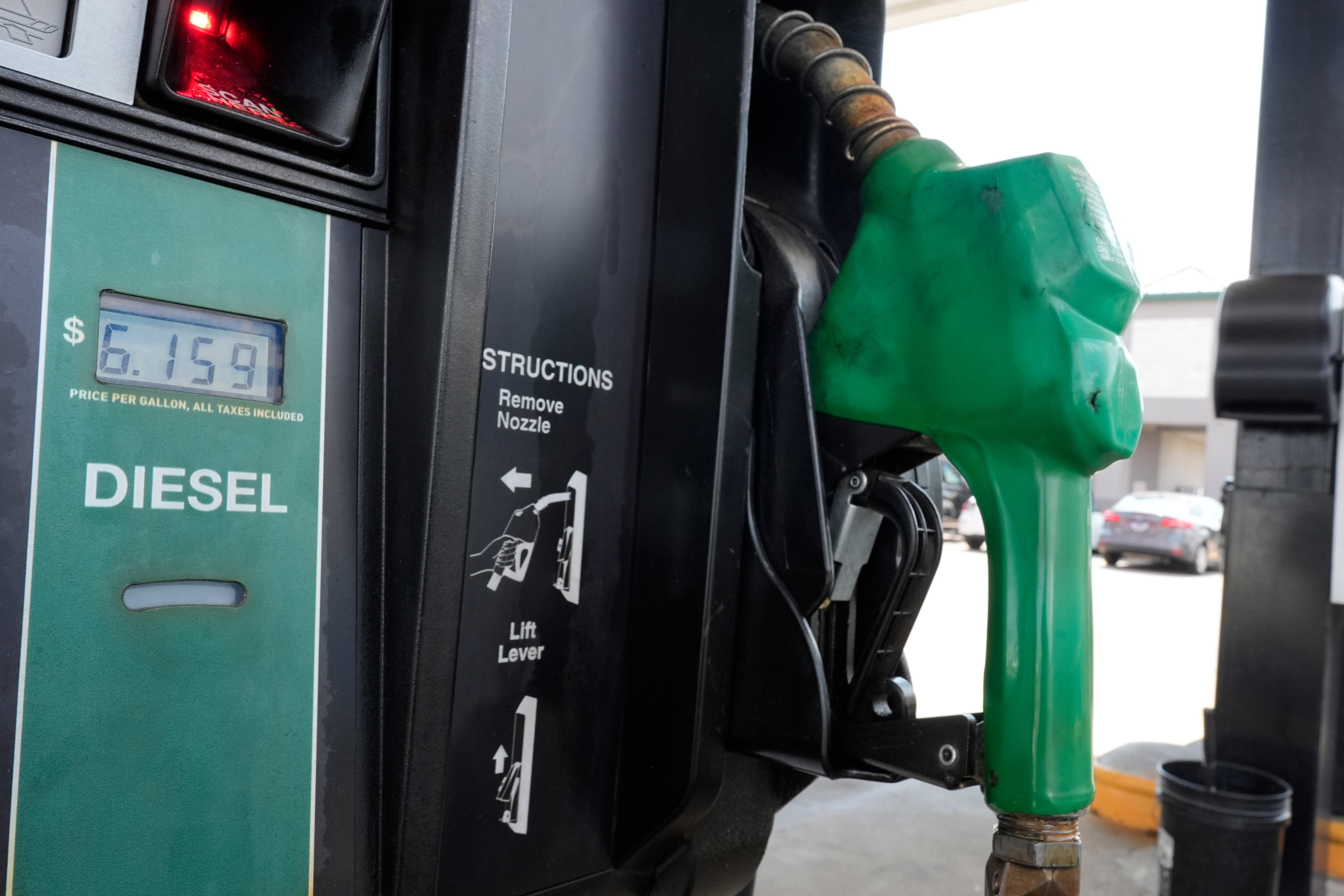
NEW YORK — In a development that is sending shockwaves through the logistics sector and Wall Street trading floors, retail diesel prices in the United States have surged past the critical threshold of $6 a gallon in several key markets. This dramatic price spike is threatening to derail recent progress on inflation and is imposing an immediate, heavy financial strain on the transportation networks that haul everyday goods across the nation.
Diesel is the lifeblood of the global economy. It powers the semi-trucks that deliver food to supermarkets, the trains that haul heavy industrial raw materials, and the agricultural machinery that harvests crops. As these costs climb, they create a cascading economic effect, driving up prices for consumer goods and presenting a major hurdle for policymakers working to stabilize the U.S. economy.
The Anatomy of the Diesel Surge: Why Prices are Skyrocketing
The rapid escalation of diesel prices to more than $6 a gallon in high-demand corridors is driven by a combination of tight global refining capacity, strategic production cuts by OPEC+, and critically low domestic inventories.
Unlike gasoline, which has seen relatively moderate fluctuations, the market for middle distillates—the category of refined petroleum that includes diesel and heating oil—has tightened significantly. Refiners globally are struggling to keep pace with demand due to unplanned maintenance shutdowns, heat-related operational slowdowns during the summer months, and a structural deficit in refining capacity that has persisted since the pandemic.
Furthermore, the decision by Saudi Arabia and Russia to extend crude oil export cuts has disproportionately affected the production of heavy, sour crudes, which are highly prized for yielding rich quantities of middle distillates. As crude prices climb, the "crack spread"—the profit margin refiners make from converting crude oil into diesel—has ballooned to historic highs, directly feeding through to the pump.
US Consumer Inflation Feels the Heat
This fuel price surge arrives at a delicate moment for the U.S. macroeconomy. Recent economic indicators reveal that U.S. consumer inflation picked up in August, rising to 3.4% Year-over-Year (YoY). Energy costs were a primary driver of this re-acceleration, throwing a wrench into the Federal Reserve's hopes for a smooth and steady glide path back to its 2.0% inflation target.
On the floor of the New York Stock Exchange, traders are adjusting their expectations. The prospect of "higher-for-longer" interest rates is once again dominating market sentiment as sticky energy costs threaten to embed themselves deeper into the service and retail sectors.
| Fuel Category & Market Indicator | Current Average Price / Value | One Year Ago | Year-over-Year Change (%) |
|---|---|---|---|
| US Diesel (National Average Range) | $4.65 - $6.15 / Gallon | $3.90 / Gallon | +19% to +57% (Regional) |
| US Regular Gasoline Average | $3.88 / Gallon | $3.68 / Gallon | +5.4% |
| Brent Crude Oil (per barrel) | $94.20 | $81.50 | +15.6% |
| US Consumer Price Index (CPI) YoY | 3.4% (August Print) | 3.2% (Prior Period) | +0.2% MoM Acceleration |
The Direct Strain on Hauling and Everyday Goods
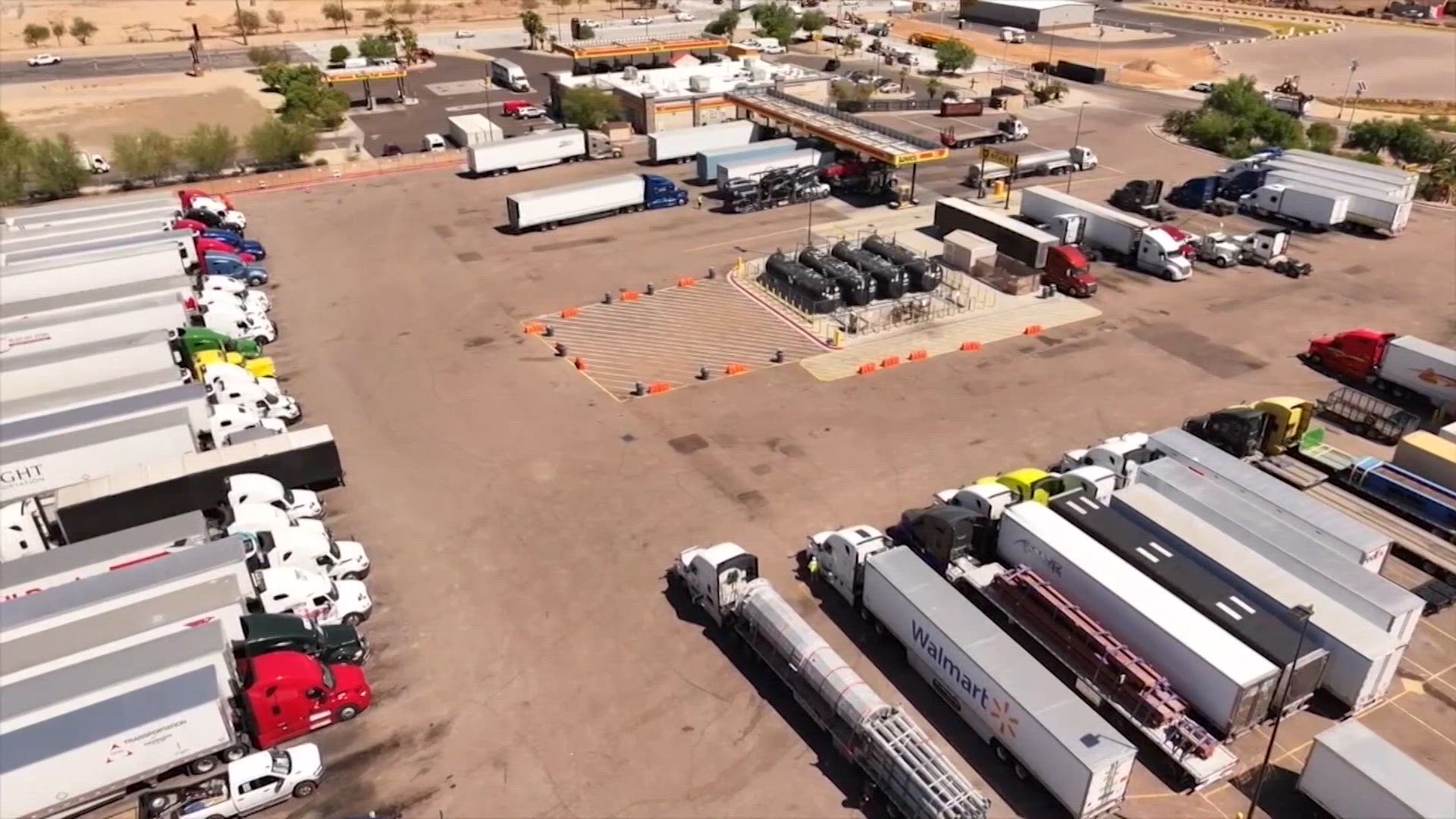
For the trucking companies responsible for moving over 70% of America's freight, the $6 mark represents a severe operational headwind. Independent owner-operators and fleet managers are feeling an immediate squeeze on profit margins.
To survive, carriers are aggressively implementing fuel surcharges. These surcharges are passed directly to shippers—the manufacturers, wholesalers, and retailers who contract trucking services. Ultimately, these added transport costs find their way to retail store shelves, threatening to raise prices on grocery items, clothing, electronics, and construction materials.
"We are operating on razor-thin margins as it is," says an industry transport executive. "When diesel crosses the $5.50 and $6 mark, the cost of running a single long-haul route can increase by hundreds of dollars. If we cannot pass these costs along, we simply stop running those lanes. If we do pass them along, the consumer pays more at checkout."
Executive Summary of Supply Chain Vulnerabilities:
- Squeezed Trucking Margins: Smaller, independent carriers face existential threats as cash flow is consumed by upfront fueling costs.
- Agricultural Pressures: Farming equipment and crop transport rely heavily on diesel, raising fears of localized food price spikes in the coming quarters.
- Industrial Drag: Manufacturing supply chains face higher input delivery costs, raising the producer price index (PPI) and threatening domestic manufacturing output.
Wall Street Perspective & The Federal Reserve's Dilemma
The resurgence in diesel prices has complicated the outlook for monetary policy. While core inflation (excluding food and energy) has shown signs of moderation, headline CPI remains vulnerable to these supply-driven commodity shocks. The Federal Reserve cannot easily ignore a prolonged energy surge, as high fuel costs can seep into core services through increased delivery and transportation surcharges.
Equity markets have reacted with caution. Transport and logistics stocks have faced selling pressure, while consumer discretionary sectors are being analyzed with renewed skepticism. Investors fear that high pump prices will act as a "tax" on consumer wallets, reducing disposable income ahead of the critical holiday shopping season.
Furthermore, global diesel inventories remain well below historical five-year averages. With winter approaching in the Northern Hemisphere, demand for heating oil—which is chemically identical to diesel—will compete for the same refined product pool, potentially driving prices even higher if severe winter weather disruptions occur.
Frequently Asked Questions
Why does diesel cost more than regular gasoline?
Diesel is subject to distinct supply-and-demand dynamics compared to gasoline. It is more heavily exposed to global industrial activity and international trade. Current high prices are driven by a acute shortage of global refining capacity optimized for middle distillates, coupled with OPEC+ supply cuts of heavy crude oils, which yield more diesel than lighter U.S. shale oils.
How long will it take for $6 diesel to impact retail store prices?
The pass-through effect typically occurs on a lag of two to six weeks. Many shipping contracts feature dynamic fuel surcharges that adjust weekly based on Department of Energy national averages. Consumers can expect to see the impact reflected in the price of heavy, low-margin goods—such as bottled water, paper products, and fresh agricultural produce—first, followed by broader consumer goods if high fuel prices persist through the quarter.
Macroeconomic Transmission, Institutional Capital Flows, and Sectoral Valuation Multiples
Global equity and commodity markets in late 2026 are navigating a delicate equilibrium between resilient corporate earnings growth and structural cost pressures across energy, semiconductors, and international trade corridors. On Dalal Street, the sharp upward trajectory of the BSE Sensex and NSE Nifty 50—frequently surging 450 to 890 points in single sessions—reflects powerful domestic institutional inflows (DIIs) anchored by systematic investment plans (SIPs) exceeding ₹23,000 crore monthly, alongside a stable monetary policy stance from the Reserve Bank of India (RBI).
On Wall Street and across East Asian tech bourses, however, institutional portfolio managers are applying far stricter valuation discipline to the artificial intelligence and semiconductor hardware complex. While foundational model breakthroughs—such as Alibaba's latest Qwen architecture and next-generation enterprise reasoning agents—continue to lower inference costs per token, hardware supply chains face crosswinds from export control recalibrations, high-bandwidth memory (HBM3e/HBM4) allocation bottlenecks at SK Hynix, and hyperscaler capital expenditure scrutiny.
Meanwhile, in the real physical economy, freight and logistics operators are grappling with diesel fuel prices exceeding $6.00 per gallon in key North American corridors due to distillate refinery maintenance and geopolitical crude risk premiums. Because heavy class-8 trucking moves over 72% of domestic retail and agricultural freight by tonnage, elevated middle-distillate costs transmit directly into core consumer price inflation (CPI) with a 60-to-90-day lag.
| Market & Macro Indicator | Current Benchmark Reading | Portfolio & Economic Transmission Impact |
|---|---|---|
| Indian Equity Benchmarks (Sensex / Nifty) | Nifty sustained above 24,250–24,650 zone | Driven by RBI rate stability, banking credit growth & domestic SIP inflows |
| AI & Semiconductor Hardware Complex | High dispersion across HBM memory & open-weight LLMs | Rewards vertically integrated chipmakers and efficient model architectures |
| U.S. Ultra-Low-Sulfur Diesel (ULSD) | Surpassing $6.00/gal in key freight corridors | Increases long-haul LTL/FTL freight surcharges & food distribution costs |
| Global Sovereign Bond Yields (10Y) | Stabilizing as central banks pause tightening cycles | Supports equity valuation multiples in financials and industrials |
Central Bank Liquidity, Bond Yield Curves, and Portfolio Risk Allocation
Fixed-income strategists highlight that sovereign 10-year bond yields remain the primary gravity well governing equity price-to-earnings (P/E) multiples. When central banks hold benchmark repo and federal funds rates steady while core inflation moderates, rate-sensitive sectors—including private-sector banking, capital goods, automotive manufacturing, and commercial infrastructure—experience immediate balance-sheet relief and credit expansion.
- Semiconductor Capex Rotation: Institutional funds are rotating from overextended momentum software plays into profitable foundry, memory (HBM), and data-center power grid equipment suppliers.
- Freight & Distillate Hedging: Major retail supply chains are accelerating intermodal rail conversion and fleet aerodynamics upgrades to offset $6+/gallon ultra-low-sulfur diesel (ULSD) surcharges.
- Emerging Market Outperformance: Domestic consumption-driven economies with robust foreign exchange reserves continue to attract long-only sovereign wealth allocations despite global trade tariff friction.
Related Prime Media Investigative Dispatches
Frequently Asked Questions (Editorial Briefing)
Q1: What is driving the resilience of Indian stock benchmarks like Sensex and Nifty during global volatility?
Strong domestic institutional buying powered by record monthly mutual fund SIP inflows, stable RBI monetary policy rates, and healthy corporate balance sheets in banking and infrastructure insulate domestic equities from short-term global shocks.
Q2: Why do high diesel prices impact everyday consumer goods more than gasoline prices?
Diesel powers heavy freight trucks, freight locomotives, agricultural harvesters, and maritime barges. When diesel exceeds $6 a gallon, carriers add fuel surcharges that raise the landed cost of groceries, building materials, and retail inventory.
Editorial Analysis & Fact-Checking by Elena Rostova (Aerospace, Deep Science & Quantum Editor), Prime Media Global Desk.