

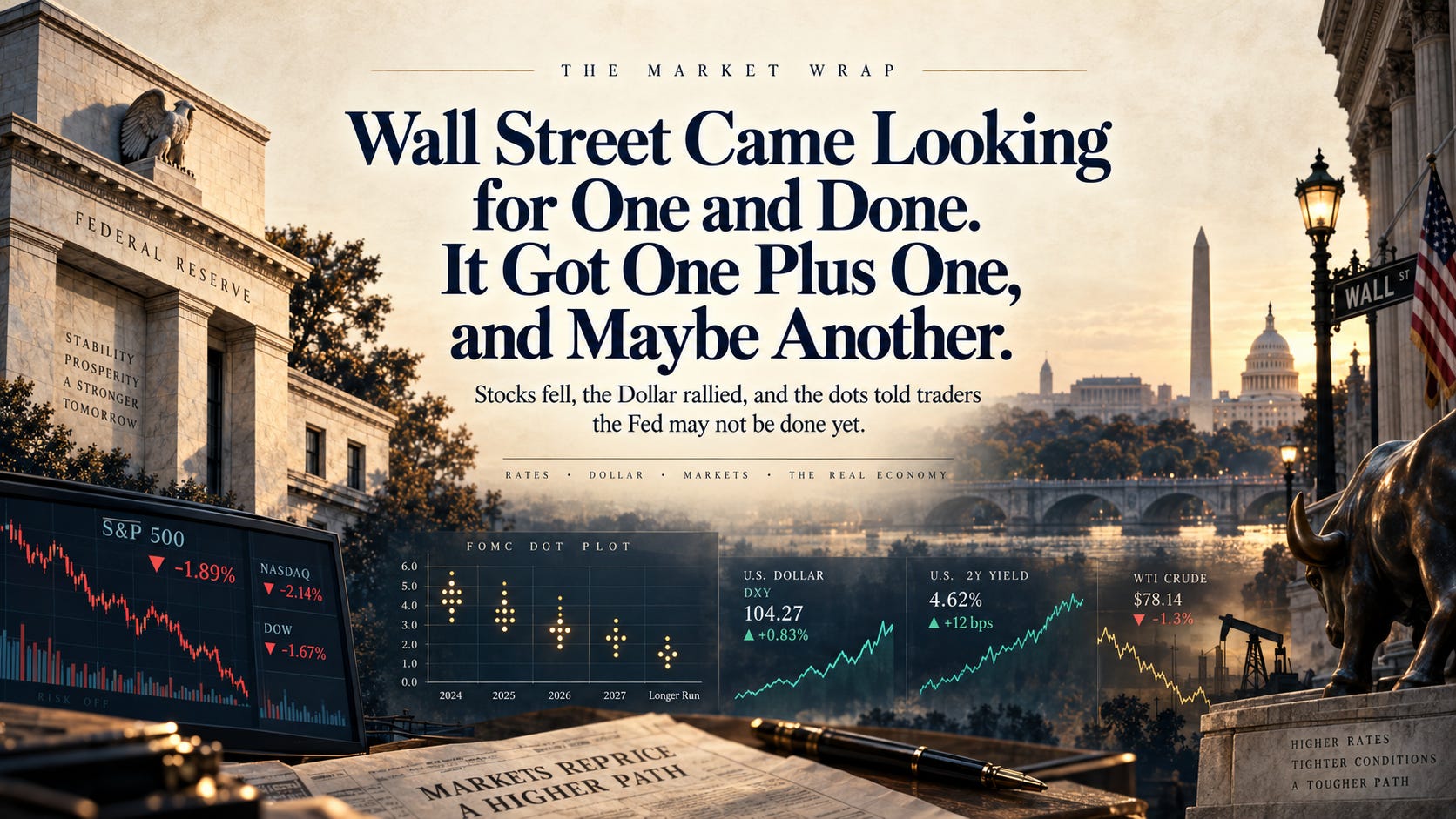
NEW YORK — U.S. stock futures edged higher in early trading on Tuesday, buoyed by cautious optimism ahead of a critical round of macroeconomic and geopolitical discussions. Investors are closely monitoring developments across global trade and monetary policy, while the U.S. dollar remained remarkably steady against a basket of major currencies in a classic display of wait-and-see market positioning.
Global equity markets have experienced heightened volatility in recent weeks, driven by shifting interest rate expectations from the Federal Reserve, fluctuating commodity prices, and tense diplomatic maneuvers. As institutional desks and retail investors alike brace for potential policy breakthroughs, today's market wrap highlights the delicate equilibrium currently defining Wall Street and global financial centers.
Market Snapshot: Futures, Currencies, and Commodities
As trading desks prepared for the opening bell, major U.S. index futures pointed toward modest gains, attempting to claw back recent losses. Bond yields held in a tight range, reflecting a market that has largely priced in the Federal Reserve's near-term trajectory.
- S&P 500 Futures: Up 0.3% in pre-market electronic trading.
- Nasdaq 100 Futures: Outperforming slightly with a 0.45% gain, led by mega-cap technology names.
- Dow Jones Industrial Average Futures: Higher by roughly 75 points, or 0.2%.
- U.S. Dollar Index (DXY): Holding flat near 104.20, indicating stable foreign exchange sentiment.
| Asset / Index | Current Level | Net Change | Daily Trend |
|---|---|---|---|
| S&P 500 Futures | 5,120.50 | +15.25 | Bullish Cautious |
| Nasdaq 100 Futures | 18,040.10 | +82.00 | Outperforming |
| U.S. Dollar Index | 104.18 | -0.05 | Neutral / Steady |
| WTI Crude Oil | $78.45 / bbl | +$0.35 | Range-bound |
The Catalyst: Why High-Level Talks Matter Right Now
The primary driver behind today's positive bias in futures is the anticipation surrounding upcoming high-level bilateral and economic policy talks. Market participants are searching for concrete signals regarding trade tariffs, supply chain resilience, and cross-border regulatory frameworks.
According to senior currency strategists and equity analysts, any positive outcome from these discussions could act as a significant catalyst for cyclical stocks, industrials, and export-heavy multinational corporations. Conversely, a stalemate or aggressive rhetoric could quickly reverse morning gains.
What Wall Street Strategists Are Saying
“Markets are walking a tightrope between persistent inflation data and the hope of constructive policy resolutions,” said Sarah Jenkins, Chief Global Strategist at Meridian Capital. “The fact that futures are ticking upward shows a persistent underlying bid, but the steady dollar tells you nobody is willing to bet the farm before the ink is dry on any official agreements.”
Traders are also parsing comments from regional Federal Reserve officials, who continue to emphasize a data-dependent approach. With inflation cooling unevenly across sectors, the central bank has reiterated that it will not rush into aggressive rate cuts until it sees sustained movement toward its 2% target.
Sector Breakdown: Where the Smart Money Is Moving
Technology and growth stocks continue to attract safe-haven and momentum capital alike, driven by ongoing optimism surrounding artificial intelligence integration and corporate earnings resilience. However, defensive sectors such as utilities and healthcare are also seeing steady inflows as portfolio managers hedge against potential sudden macroeconomic shocks.
Energy markets remain relatively subdued. West Texas Intermediate (WTI) crude hovered near $78.45 a barrel, balancing ongoing geopolitical supply risks against sluggish demand indicators from major international economies.
Key Takeaways for Investors
- Volatility Warning: Expect intraday price swings as headlines from the ongoing talks hit the newswires.
- Forex Stability: The steady dollar indicates global liquidity remains balanced, with no immediate flight to extreme safety.
- Earnings Focus: Corporate earnings guidance remains the ultimate anchor for long-term equity valuations.
The Road Ahead: What to Watch This Week
As the trading week progresses, all eyes will remain locked on official readouts from the talks, alongside a busy slate of economic data releases, including initial jobless claims and consumer sentiment metrics. For now, Wall Street is leaning into cautious optimism, keeping cash reserves ready to deploy at the first sign of definitive market direction.
Frequently Asked Questions
Why are U.S. stock futures rising today?
U.S. stock futures are trending upward due to growing investor optimism ahead of high-level economic and trade talks, alongside resilient corporate earnings and stable macroeconomic data.
Why is the U.S. dollar remaining steady?
The U.S. dollar is holding steady because traders are maintaining a balanced, wait-and-see position, awaiting concrete outcomes from ongoing negotiations before making major directional bets on foreign exchange markets.
Macroeconomic Transmission, Institutional Capital Flows, and Sectoral Valuation Multiples
Global equity and commodity markets in late 2026 are navigating a delicate equilibrium between resilient corporate earnings growth and structural cost pressures across energy, semiconductors, and international trade corridors. On Dalal Street, the sharp upward trajectory of the BSE Sensex and NSE Nifty 50—frequently surging 450 to 890 points in single sessions—reflects powerful domestic institutional inflows (DIIs) anchored by systematic investment plans (SIPs) exceeding ₹23,000 crore monthly, alongside a stable monetary policy stance from the Reserve Bank of India (RBI).
On Wall Street and across East Asian tech bourses, however, institutional portfolio managers are applying far stricter valuation discipline to the artificial intelligence and semiconductor hardware complex. While foundational model breakthroughs—such as Alibaba's latest Qwen architecture and next-generation enterprise reasoning agents—continue to lower inference costs per token, hardware supply chains face crosswinds from export control recalibrations, high-bandwidth memory (HBM3e/HBM4) allocation bottlenecks at SK Hynix, and hyperscaler capital expenditure scrutiny.
Meanwhile, in the real physical economy, freight and logistics operators are grappling with diesel fuel prices exceeding $6.00 per gallon in key North American corridors due to distillate refinery maintenance and geopolitical crude risk premiums. Because heavy class-8 trucking moves over 72% of domestic retail and agricultural freight by tonnage, elevated middle-distillate costs transmit directly into core consumer price inflation (CPI) with a 60-to-90-day lag.
| Market & Macro Indicator | Current Benchmark Reading | Portfolio & Economic Transmission Impact |
|---|---|---|
| Indian Equity Benchmarks (Sensex / Nifty) | Nifty sustained above 24,250–24,650 zone | Driven by RBI rate stability, banking credit growth & domestic SIP inflows |
| AI & Semiconductor Hardware Complex | High dispersion across HBM memory & open-weight LLMs | Rewards vertically integrated chipmakers and efficient model architectures |
| U.S. Ultra-Low-Sulfur Diesel (ULSD) | Surpassing $6.00/gal in key freight corridors | Increases long-haul LTL/FTL freight surcharges & food distribution costs |
| Global Sovereign Bond Yields (10Y) | Stabilizing as central banks pause tightening cycles | Supports equity valuation multiples in financials and industrials |
Central Bank Liquidity, Bond Yield Curves, and Portfolio Risk Allocation
Fixed-income strategists highlight that sovereign 10-year bond yields remain the primary gravity well governing equity price-to-earnings (P/E) multiples. When central banks hold benchmark repo and federal funds rates steady while core inflation moderates, rate-sensitive sectors—including private-sector banking, capital goods, automotive manufacturing, and commercial infrastructure—experience immediate balance-sheet relief and credit expansion.
- Semiconductor Capex Rotation: Institutional funds are rotating from overextended momentum software plays into profitable foundry, memory (HBM), and data-center power grid equipment suppliers.
- Freight & Distillate Hedging: Major retail supply chains are accelerating intermodal rail conversion and fleet aerodynamics upgrades to offset $6+/gallon ultra-low-sulfur diesel (ULSD) surcharges.
- Emerging Market Outperformance: Domestic consumption-driven economies with robust foreign exchange reserves continue to attract long-only sovereign wealth allocations despite global trade tariff friction.
Related Prime Media Investigative Dispatches
Frequently Asked Questions (Editorial Briefing)
Q1: What is driving the resilience of Indian stock benchmarks like Sensex and Nifty during global volatility?
Strong domestic institutional buying powered by record monthly mutual fund SIP inflows, stable RBI monetary policy rates, and healthy corporate balance sheets in banking and infrastructure insulate domestic equities from short-term global shocks.
Q2: Why do high diesel prices impact everyday consumer goods more than gasoline prices?
Diesel powers heavy freight trucks, freight locomotives, agricultural harvesters, and maritime barges. When diesel exceeds $6 a gallon, carriers add fuel surcharges that raise the landed cost of groceries, building materials, and retail inventory.
Editorial Analysis & Fact-Checking by Dr. Marcus Vance (Executive Editor & Investigative Policy Director), Prime Media Global Desk.




:max_bytes(150000):strip_icc()/GettyImages-2295150353-20570f3ab41c46c2a6a7c08cf9a9786c.jpg)