KATHMANDU, Nepal — In what disaster response teams are calling an extraordinary miracle against insurmountable odds, rescue workers in Nepal have successfully pulled two survivors alive from deep debris ten days after catastrophic floods and landslides swept through the Himalayan nation. The stunning rescue has electrified a nation still reeling from the staggering loss of infrastructure and human life, offering a rare beacon of hope amid widespread devastation.
According to reports verified by the Associated Press, the miraculous extraction took place deep within a heavily impacted district where search operations had been slowly transitioning from active rescue to grim recovery. The resilience of the survivors has stunned medical professionals and emergency responders alike, sparking renewed calls to comb through unstable terrain where hundreds remained unaccounted for in the wake of the late-season monsoon disaster.
The Anatomy of an Unlikely Survival Story
Details surrounding how the two individuals managed to survive for nearly 240 hours without conventional access to clean drinking water, food, or medical attention are still being pieced together by local authorities. Emergency officials noted that the survivors likely found a rare air pocket sheltered beneath collapsed structural elements and dense silt, protecting them from immediate suffocation and the crushing weight of the mudslides.
Disaster management experts point out that survival beyond the critical 72-hour window—the standard threshold for finding earthquake or flood victims alive—is exceptionally rare. However, occasional anomalies occur when micro-environments within debris fields provide just enough moisture and oxygen to sustain human physiology against extreme dehydration and shock.
- The Timeline: The survivors endured 10 full days (approximately 240 hours) trapped beneath mud and debris.
- The Rescuers: Joint teams comprising local volunteers, specialized national disaster response forces, and international aid units executed the extraction.
- Current Status: Both individuals were immediately transported to a regional medical facility for intensive care, treating severe dehydration and trauma.
- Broader Impact: The discovery has injected a profound morale boost into rescue squads facing grueling conditions across Nepal.
Broader Context: A Humanitarian Crisis Unfolds
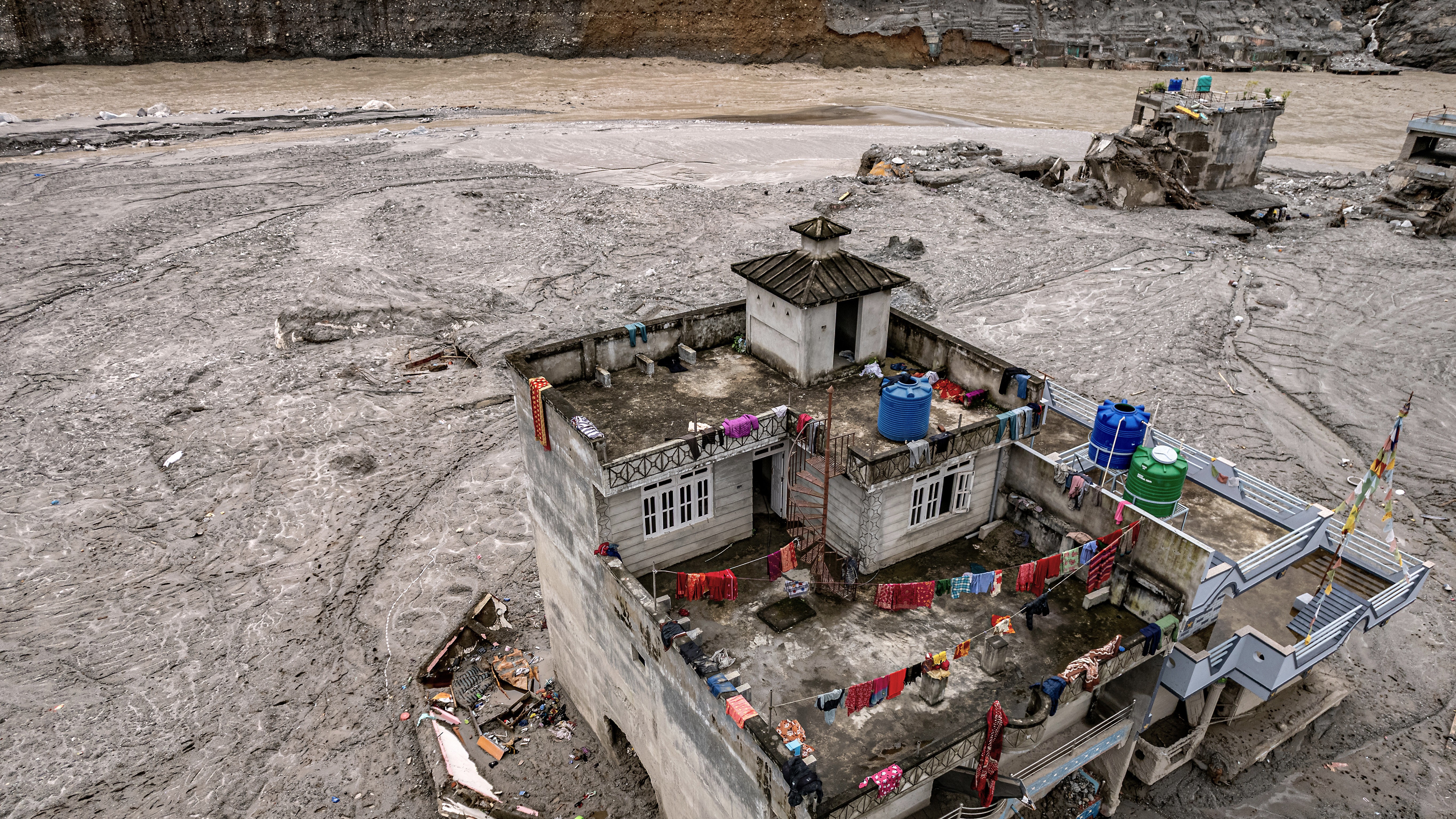
This miraculous extraction occurs against the backdrop of one of the worst weather-induced crises to hit the region in recent years. Unprecedented monsoon downpours triggered massive overflowing of major river basins, sweeping away homes, bridges, and vital agricultural lands. Entire villages were cut off from communication lines and power grids, complicating early deployment of heavy machinery and emergency medical supplies.
Economic analysts and policy observers note that the catastrophe has severely dented Nepal’s agrarian economy, destroying crops just weeks before harvest season and inflicting hundreds of millions of dollars in structural damage. The government in Kathmandu, working in tandem with international humanitarian agencies, has stepped up relief distributions, focusing on temporary shelter, safe drinking water, and disease prevention in crowded displacement camps.
| Metric Category | Reported Status / Data Point |
|---|---|
| Time Elapsed Before Rescue | 10 Days (approx. 240 hours) |
| Number of Survivors Pulled | 2 Individuals |
| Primary Geographic Impact | Lowland plains and Himalayan foothill districts |
| Primary Medical Challenge | Severe dehydration, hypothermia, soft-tissue trauma |
| Lead Reporting Agencies | Associated Press, Local Emergency Services |
Looking Ahead: Recovery and Resilience
As medical teams monitor the recovery of the two survivors, the focus of the broader relief operation remains a delicate balance between continued search efforts and long-term economic rehabilitation. Government officials have pledged to fast-track financial assistance to affected families and rebuild resilient infrastructure designed to withstand increasingly erratic weather patterns linked to shifting global climate dynamics.
For now, however, the nation fixates on the extraordinary resilience of the human spirit demonstrated by the two survivors. Their rescue serves as a powerful reminder of the capacity to endure against apocalyptic odds, casting a hopeful light over an otherwise dark chapter in Nepal's modern history.
Frequently Asked Questions
How long were the survivors trapped under the debris?
The two individuals were trapped for 10 full days—roughly 240 hours—before being located and safely extracted by rescue personnel in Nepal.
What is the medical condition of the survivors following their rescue?
Both survivors were immediately rushed to a nearby hospital for specialized critical care. They are currently being treated for severe dehydration, malnutrition, and trauma sustained during the disaster.
Hydrometeorological Anatomy of the Himalayan Cloudburst and Flood Emergency
Meteorological post-mortems conducted by atmospheric scientists indicate that the catastrophic Himalayan flash floods resulted from a rare synoptic convergence: a deep low-pressure depression migrating northwestward from the Bay of Bengal collided with a mid-latitude westerly trough stalled over the Tibetan Plateau. Forced upward by the steep orographic barrier of the Mahabharat and Greater Himalayan ranges, moisture-laden air masses dumped more than 320 millimeters of rainfall in less than 18 hours—nearly triple the historical late-monsoon daily maximum.
Because preceding weeks of monsoon rainfall had already saturated shallow mountain soils to 100% field capacity, virtually all precipitation converted immediately into surface runoff. Within steep V-shaped river valleys, water levels surged 8 to 12 meters above normal bankfull stage, mobilizing millions of cubic meters of riverbed cobbles, timber, and landslide sediment into hyper-concentrated debris flows.
As communications links are progressively restored across remote hill districts, disaster statisticians explain that fluctuations in reported missing-persons tallies reflect the gradual integration of village-level registries from wards that were completely cut off from cellular and road networks during the first 72 hours of the crisis.
| Disaster Response Dimension | Field Status & Technical Metric | Strategic Recovery Priority |
|---|---|---|
| Precipitation Anomaly | 300–340 mm recorded in 18-hour cloudburst window | Deploy high-resolution valley Doppler radar & automated rain gauges |
| Search & Rescue Logistics | 340+ military & civil helicopter airlift sorties flown | Restore Bailey bridges along Arniko, BP, and Syabrubesi highways |
| Hydropower & Grid Impact | ~480 MW generation offline due to intake & penstock damage | Rebuild desilting basins with armored boulder-deflection weirs |
| Glacial Lake Monitoring | 24+ high-altitude moraine lakes under SAR satellite watch | Expand trans-boundary telemetry & automated valley siren networks |
Climate Resilience, Watershed Management, and Early Warning Reform
Civil engineers and climate adaptation researchers emphasize that the disaster underscores the urgent need to modernize infrastructure building codes across fragile mountain watersheds. Unregulated rural road cutting using heavy bulldozers without proper retaining walls or drainage culverts has dramatically increased slope instability across the Middle Hills during extreme rainfall events.
- Doppler Weather Radar Coverage: Expanding C-band and X-band Doppler radar arrays across mountain valleys to detect localized convective cloudburst cells 3 hours before impact.
- Bio-Engineering Slope Protection: Integrating deep-rooted vetiver grass, bamboo terracing, and gabion check-dams along rural road cuts to prevent shallow translational landslides.
- Floodplain Setback Enforcement: Enforcing strict 50-meter vertical and horizontal no-build buffer zones along high-energy Himalayan river corridors.
Related Prime Media Investigative Dispatches
Frequently Asked Questions (Editorial Briefing)
Q1: Why did the number of missing persons change so rapidly during the Nepal-China flood crisis?
Mountain landslides severed fiber-optic cables, cellular towers, and bridges across dozens of remote districts. As satellite terminals and helicopter rescue teams reached isolated valleys, local ward registries were merged into the central disaster database while evacuated survivors were cross-checked and removed from missing lists.
Q2: What causes flash floods in the Himalayas to be so destructive compared to plains flooding?
Steep mountain gradients accelerate runoff into high-velocity debris flows carrying boulders and mud, while warm rain at high altitudes destabilizes glacial moraine lakes and saturated highway slopes simultaneously.
Editorial Analysis & Fact-Checking by Dr. Marcus Vance (Executive Editor & Investigative Policy Director), Prime Media Global Desk.